Iceland · Designed for Living
From Iceland, Around the World
Iceland is an important place in the history of modern prosthetics. Despite its small population, the country is home to Össur, one of the world’s largest prosthetics companies. The company was founded in 1971 by Össur Kristinsson, an Icelandic prosthetist and amputee who developed the Iceross silicone liner after recognizing the need for a more comfortable interface between the residual limb and prosthetic socket. That seemingly simple innovation became the foundation of a company that would eventually grow into a global leader in prosthetic technology.
Össur’s significance extends well beyond its origins. The company has played a major role in the development of modern prosthetic technology, from silicone liners to carbon-fiber feet. Its history includes several significant developments in bionic prosthetics. Today, Össur remains headquartered in Reykjavík and is part of Embla Medical, the Iceland-based parent organization that also encompasses several other mobility-related companies and brands. Össur continues to conduct R&D and manufacturing in Iceland.
- Organization
- Össur
- City
- Reykjavík
- Scope
- Advanced manufacturing
- Date visited
- August 25, 2026
The Prosthetics Landscape
I met with a product design engineer working in R&D at Össur in Reykjavík, where he has worked extensively on the Navii bionic knee. With a background in mechanical engineering, his work has primarily focused on the actuator, the component responsible for controlling the knee’s resistance and movement. The Navii is quite fascinating—rather than relying on conventional hydraulic resistance, it uses magnetorheological (MR) fluid that responds to a magnetic field, allowing the knee to change its resistance in response to the user’s movement and environment. In the broadest sense, Navii occupies a similar space in the market to Ottobock’s C-Leg, although the technologies and designs differ considerably.
One of the topics I was most interested in leading up to this conversation was how closely Össur’s R&D teams work with amputees and prosthetic users. I had expected that engineers would receive feedback from clinicians, but I was curious about how directly that feedback makes its way back into the design process. I learned that Össur does indeed receive substantial feedback from Certified Prosthetic Orthetists (CPOs), the clinicians responsible for fitting and working with their products. This feedback can then inform firmware updates and future product development. For instance, feedback from CPOs in Germany recently contributed to a firmware update that modified Navii’s behavior when walking up inclines.
Össur also works with highly experienced "Super Users" to test its products in demanding real-world conditions. These users effectively push the devices toward their limits. There is something valuable about this kind of testing that is difficult to reproduce in a laboratory. A device can perform perfectly under controlled conditions and still behave differently when subjected to the unpredictability and intensity of someone’s actual life. By working with users who place unusually high demands on their prostheses, engineers can learn not only what works, but where a product first begins to fail.
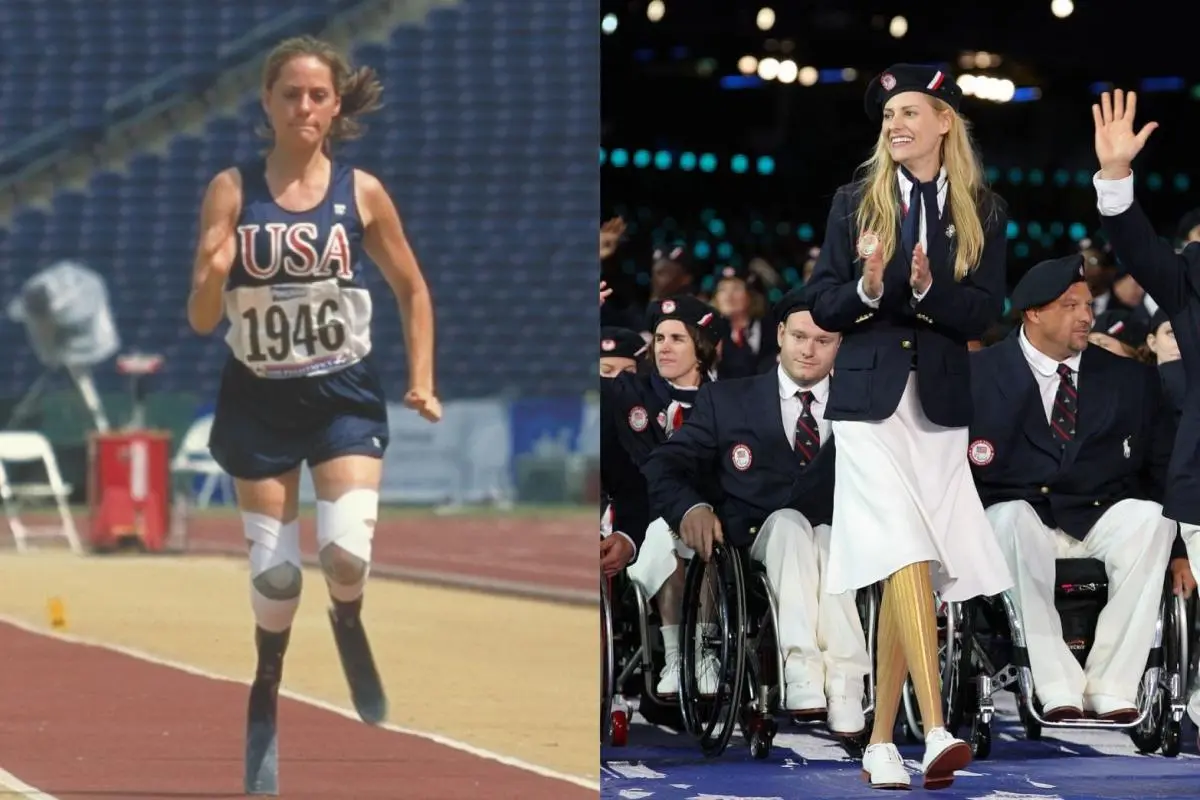
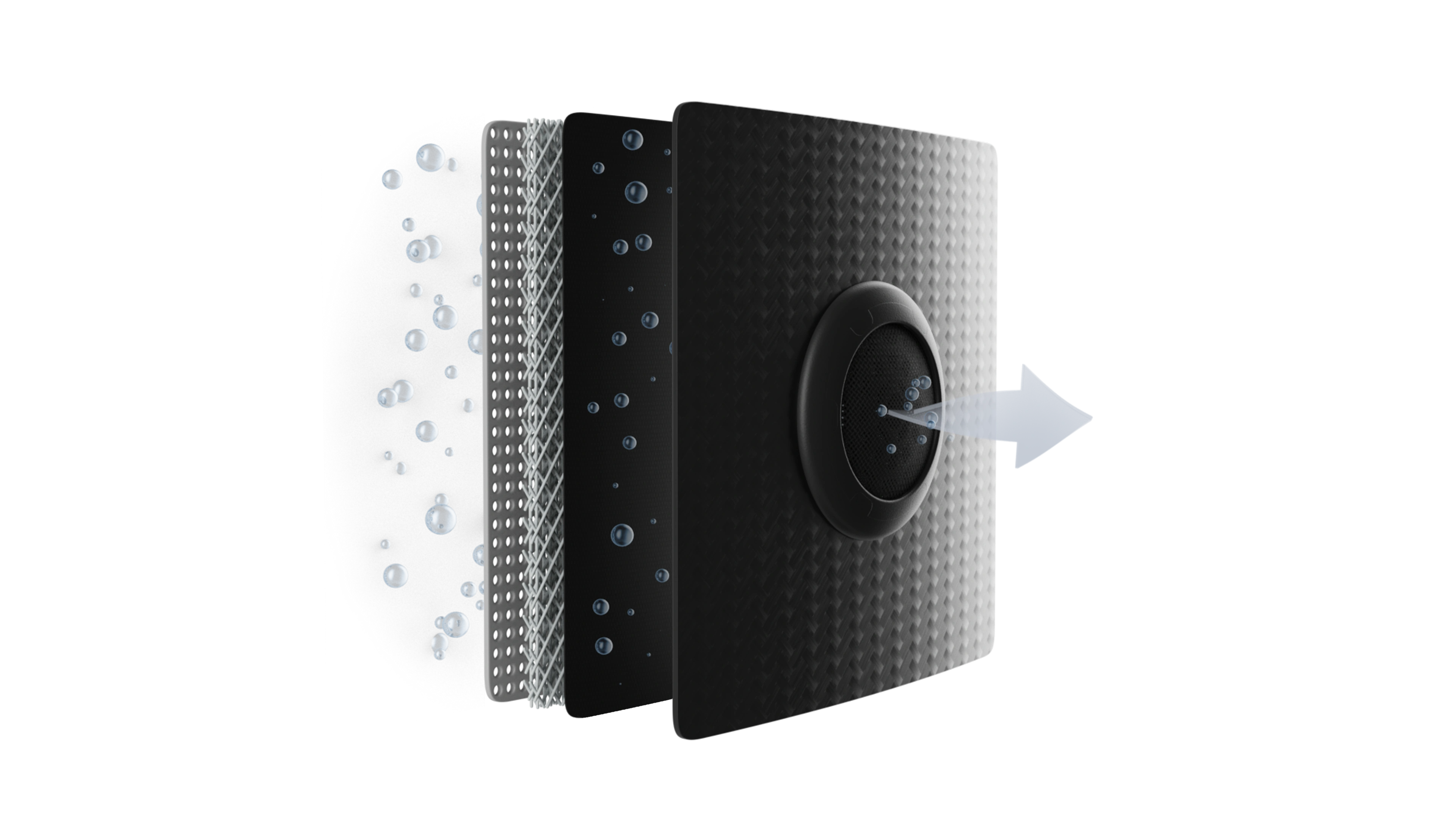
While we were talking, we also discussed some broader themes regarding prosthetic manufacturing. One such theme that I've been particularly interested in, given my background, is the role of additive manufacturing in this field. I've noticed several companies, particularly in the upper-limb space, using 3D printing as part of their prosthetic fabrication process. At Össur, however, 3D printing is primarily utilized to produce prototypes and test aspects such as fit and geometry. While some specialized interface components, like the AeroFit Seal-In® liner, do utilize 3D printing in their final production, conventional processes like injection molding remain far more practical and economical for high-volume manufacturing.
We also discussed the extent to which healthcare systems influence the products Össur chooses to design. In the United States, prosthetic care is deeply entangled with insurance reimbursement, and I was curious as to whether those constraints extend upstream into engineering and product development. They do. In the US, reimbursement rules and coding, including Medicare L-codes, can influence how products are designed and brought to market. Össur itself describes reimbursement as an important factor in the broader prosthetics market.
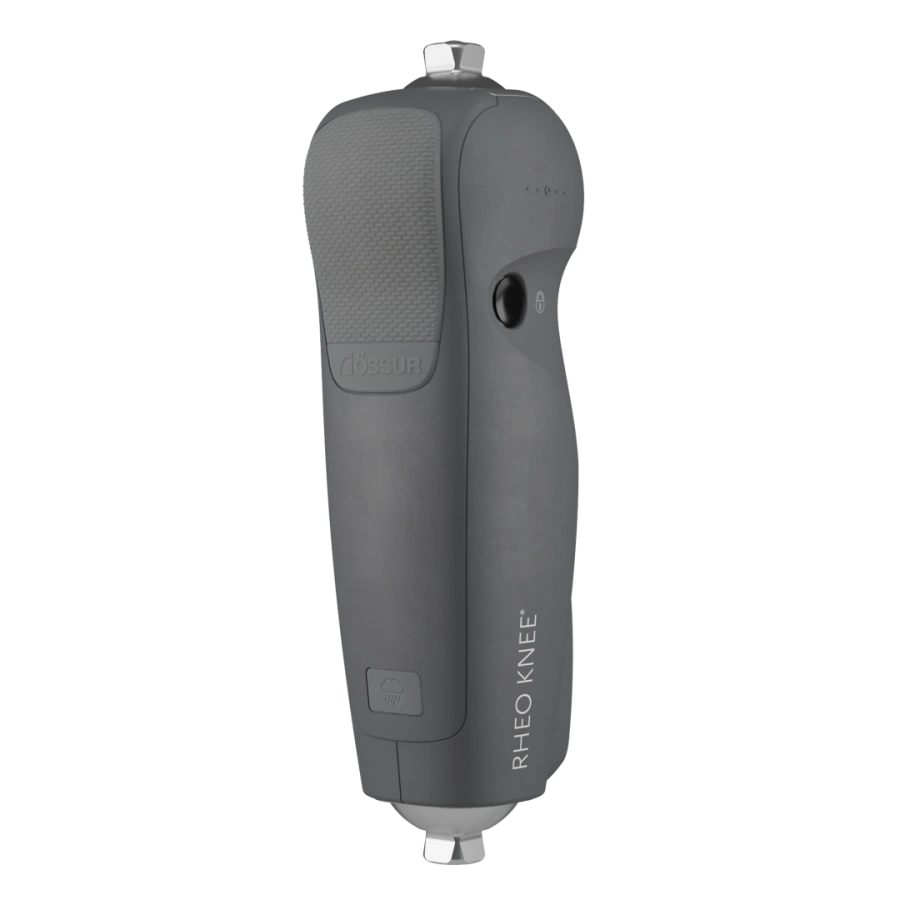
One example is the relationship between the Navii and the Rheo Knee. To understand the development of the Navii, it helps to look at its predecessor: the Rheo Knee, Össur’s original MR fluid model. While the Navii represents the next generation of this MR technology, it was designed to expand Össur’s portfolio rather than replace the original line. The two systems serve distinct needs and are not interchangeable. For instance, in the US, because the Navii introduces full waterproofing and caters to higher activity levels, it carries different insurance authorization criteria. If a patient does not meet the strict lifestyle or activity metrics required by their provider to approve the Navii, they risk being denied. By keeping the standard Rheo Knee on the market concurrently, Össur prevents this gap, ensuring that users can still qualify for an microprocessor knee even if they don't meet the specific insurance requirements for the newer model.
I was surprised by how conscious the engineer was of the ethical complications surrounding prosthetic reimbursement. In the US, the clinician selecting a prosthetic component is often operating within a reimbursement system in which unique products and configurations can be reimbursed by different amounts. This creates a possibile conflict of interest: a clinician or provider could, in principle, have a financial incentive to select a more highly reimbursed component even when another option might be more appropriate for the patient. I was struck that this was not simply an issue of clinical ethics or healthcare policy, but something that an engineer working on the other side of the system was also aware of. I still don't fully understand how manufacturers can attempt to account for this complication when designing and marketing products, though it is something I want to investigate further.
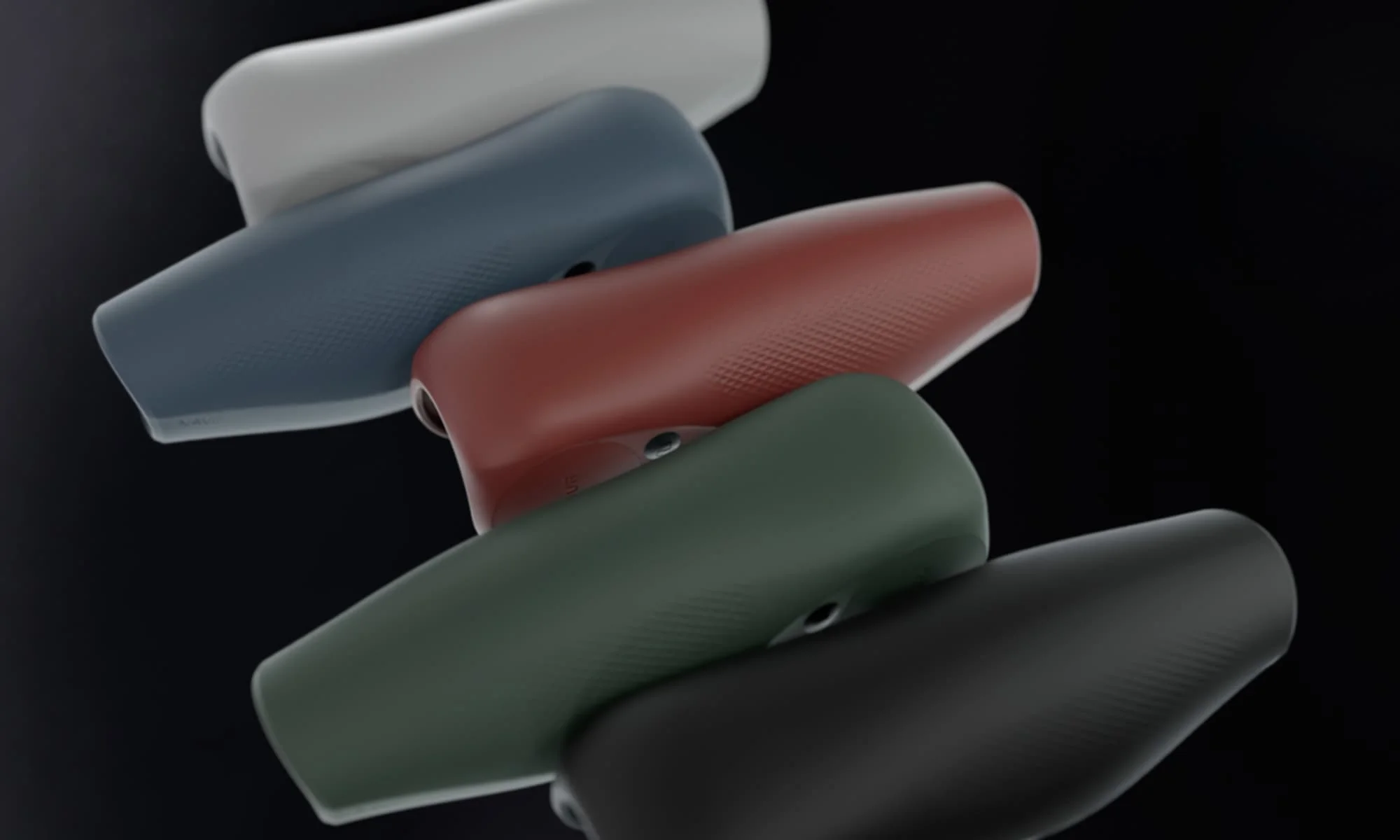
The engineer also described a broader shift toward users making their prostheses more visible and aesthetically expressive rather than trying to conceal them. This is not entirely new. Prosthetic users have been personalizing sockets and cosmetic covers for years, using patterns graphic designs to make their devices feel more like an expression of themselves. What seems to be changing is how explicitly this idea is being incorporated into the design of the prosthetic components themselves. Össur's Earth Echoes covers for Navii, for example, are available in colors inspired by Icelandic landscapes, turning what might otherwise be a purely protective component into something that can be selected and displayed as part of a user's appearance.
But he then told me a story in which a user in South Africa had described how prosthetic legs were stolen off users in broad daylight because of their high resale value. Advanced prosthetic legs can cost tens of thousands of dollars, making them valuable targets for theft. In places where this is a concern, users deliberately conceal their prostheses rather than draw attention to them.
This dichotomy demonstrates how wearing a prosthesis in public is not simply a matter of individual preference or cultural stigma. It is also shaped by economics, safety, geography, and the social environment in which the device is worn. I find this particularly fascinating because it complicates the idea of a prosthetic as a purely technological object. Like so many other items that people use everyday, the same device can mean something vastly different depending on where it is being used.
This realization forced me to challenge an assumption behind my own project. I had hoped to meet microprocessor knee users in particularly demanding environments to understand how these sophisticated devices hold up against extreme wear and tear. But if wearing an expensive bionic prosthesis visibly can label someone a target, then finding users willing to talk openly about their devices may itself be difficult in some places. Even the process of studying prostheses is shaped by the social realities surrounding it.
Our last conversation, prior to touring some of the facility labs upstairs, centered around Russia. Össur suspended sales to Russia following the invasion of Ukraine, while Ottobock, another prosthetics company, has continued to maintain some operations in the Russian market, though the nature and scope of those operations have changed since the beginning of the war. At the same time, both companies have supported prosthetic care and humanitarian efforts in Ukraine.
This raises a complex question about the obligations of a medical technology company during war. Is mobility a human right that should remain protected regardless of political circumstances? Should a company continue supplying prosthetic technology to clinics in a country whose government is responsible for a war of aggression? Or does continuing commercial activity risk indirectly supporting a state that is committing serious human rights violations? At the same time, withdrawing from a market can mean that ordinary people, people who may have nothing to do with the actions of their government, lose access to technology that could profoundly affect their mobility and independence.
There is no simple answer here. What interests me is that prosthetic technology sits in a particularly uncomfortable place within this debate. These are medical devices, but they are also commercial products, and their distribution is inseparable from geopolitics, economics, and questions of access. A decision about where a company will or will not sell a prosthetic is ultimately also a decision about who gets access to mobility.
Inside the Lab
After our conversation, we went upstairs to the lab for a closer look at some of the products being developed and assembled at Össur. Before that moment, I only knew these technologies as the final products I routinely saw patients fitted with in the clinic. In the lab, however, those products were suddenly deconstructed into motors, circuit boards, metal plates, wires, bearings, and a number of other materials. It was a useful change in perspective. A prosthetic knee that feels almost inscrutable from the outside becomes much easier to understand once someone starts taking it apart in front of you.
Navii was probably the best example of this. Unlike many microprocessor knees that use hydraulic systems to regulate resistance, Navii uses magnetorheological, or MR, fluid. MR fluid contains tiny magnetic particles suspended in a carrier liquid. Without a magnetic field, those particles move relatively freely. Apply a field and they begin to organize along the field lines, making the fluid much more resistant to shear. Because of this change in behavior, its resistance can be changed extremely quickly by altering the strength of the magnetic field.
That is what allows the knee to continually alter how freely it bends. Sensors monitor information about the knee’s motion and loading, while the control system changes the electrical current sent through the actuator. That current produces the magnetic field, which changes the behavior of the MR fluid and therefore the amount of resistance at the joint. A process that sounds almost abstract when written out becomes surprisingly intuitive once the internal hardware is sitting in someone’s hand.
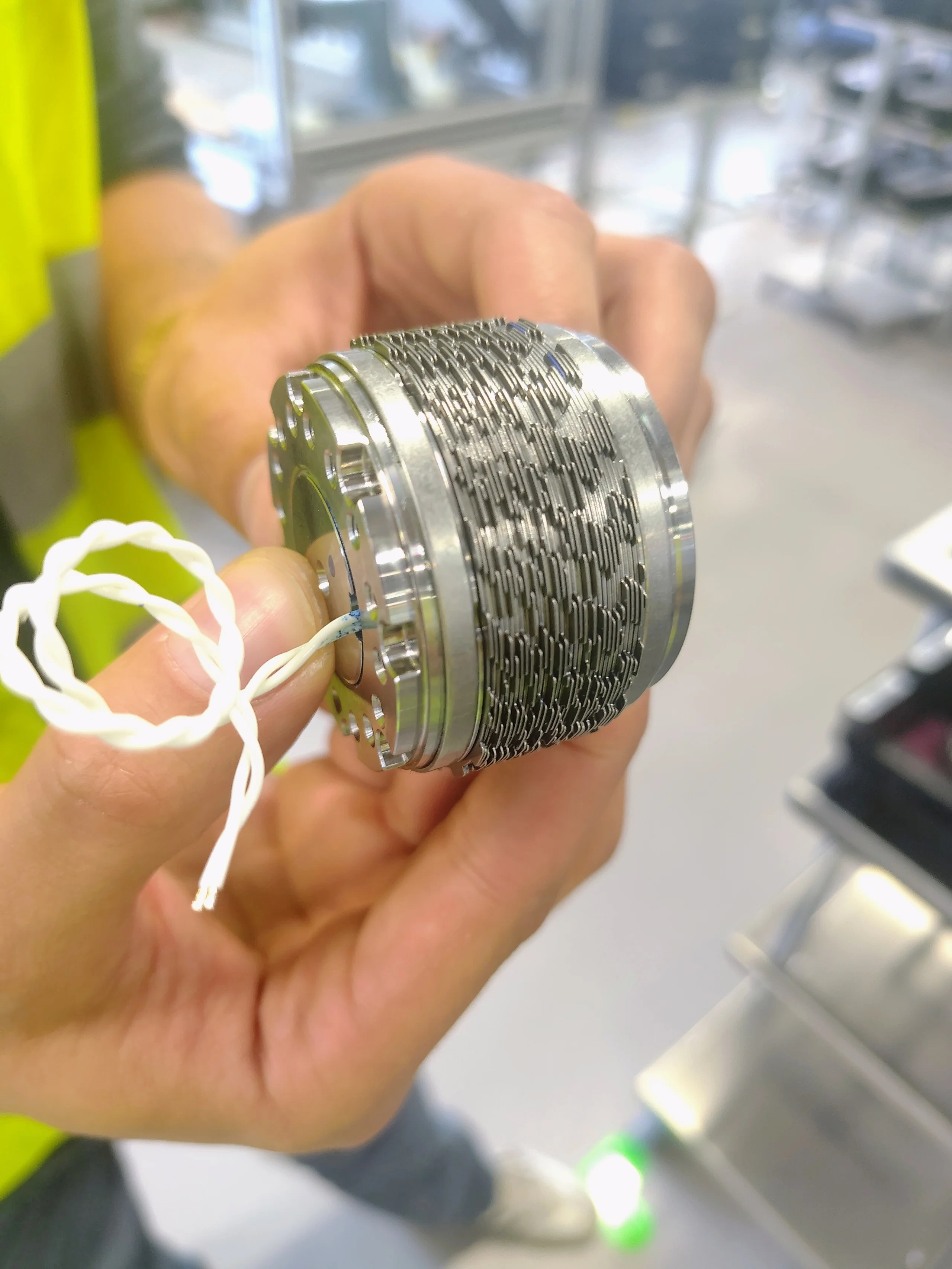
I was shown a disassembled Navii knee actuator, a similar application of the same basic MR principle used in the Rheo Knee. What had looked to me at first like a dense stack of metal rings was actually a series of alternating rotating and stationary elements. MR fluid occupies the very small spaces between them. As the knee bends, those surfaces move relative to one another and shear the fluid between them. An electromagnetic coil creates a magnetic field through this stack. Increase the field and the fluid resists that shearing motion more strongly; reduce it and the joint can move more freely.
The knee's sensors continuously provide information about how the joint is moving and being loaded. Its control system uses that information to determine how much resistance is needed, then adjusts the electrical current sent to the actuator's electromagnetic coil. Changing that current changes the strength of the magnetic field, which changes how strongly the MR fluid resists motion. Seeing the components separately made the system much easier for me to picture: sensors measuring what is happening, software deciding how the knee should respond, and the actuator producing the physical resistance.
From there we moved through other parts of the bionics lab. I saw components for the Power Knee, which approaches the mechanics of knee movement very differently. Navii primarily controls resistance: it decides how much the knee should oppose motion at a given moment. The Power Knee contains a motor that can actively add motion, including assistance during walking, standing up, and climbing stairs. Seeing the two products near one another made the distinction between different kinds of “bionic knees” much more concrete. The phrase can make them sound like variations of the same technology, when mechanically they may be solving the problem in very different ways.
I also got to handle the internal actuator from a Proprio Foot. The foot is a microprocessor-controlled ankle-foot system that can actively change the ankle angle as someone walks. During swing, the ankle dorsiflexes to lift the toes farther from the ground and reduce the chance of catching them. It can also detect changes in terrain and adjust the ankle position for slopes, and the user can change its alignment for different shoe heel heights. Those functions are easy enough to describe. What surprised me was how compact the mechanism responsible for them actually was.
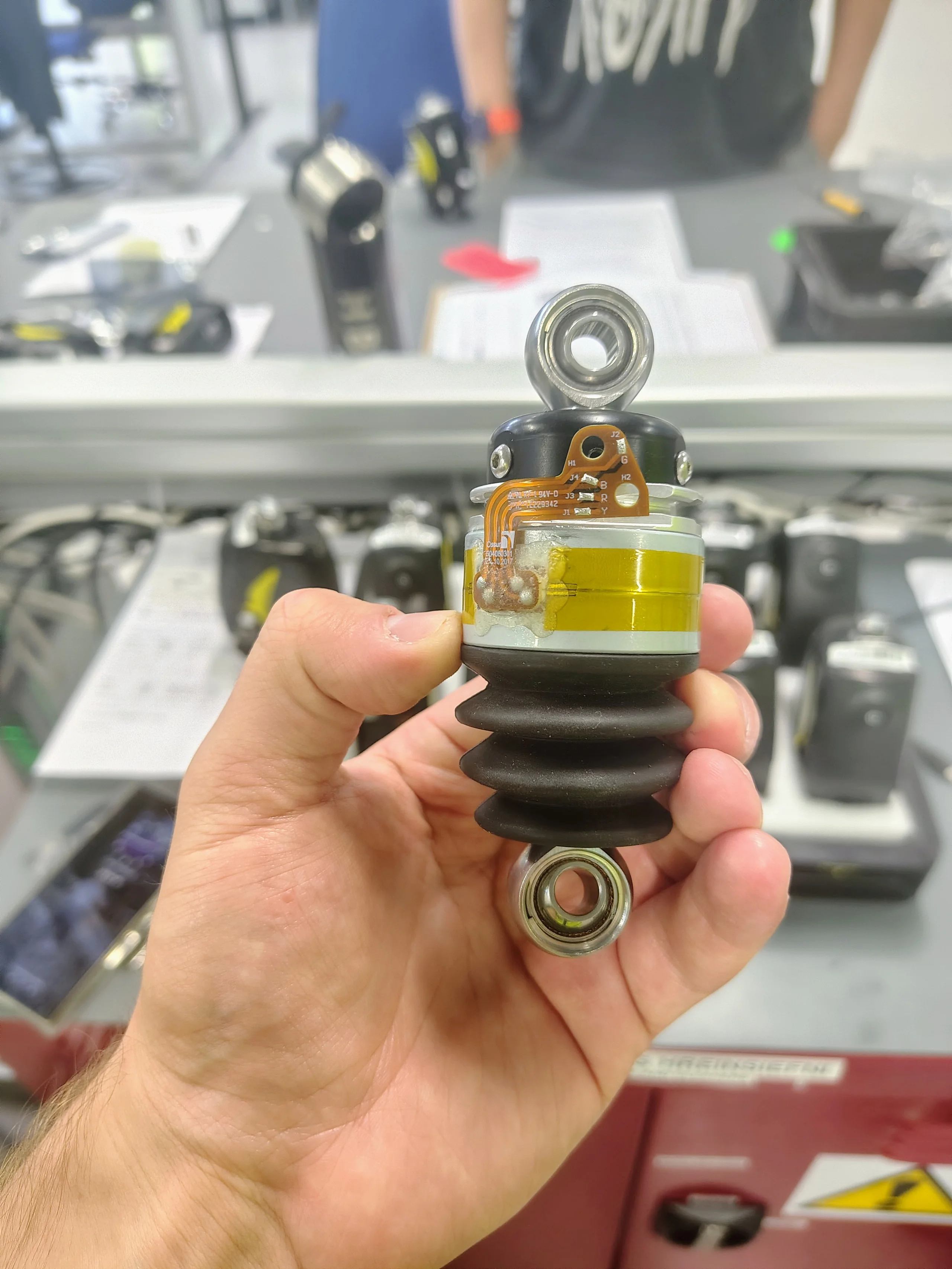
Holding that actuator was one of the moments that made my visit feel less like a generic site tour and more of an immersive design review. From the outside, a powered ankle can feel like a single object performing a sophisticated task. Open it up and the sophistication is distributed across a collection of relatively ordinary things: bearings, a motor, sensors, electronics, mechanical linkages, software. None of those pieces is particularly meaningful on its own. What matters is how precisely they have to work together, thousands of times a day, while attached to a person.
That last point became more important as we moved through the testing areas. Verification and testing seemed to sit behind almost every stage of the process. A prosthetic component does not simply need to work once; it has to repeat the same motion under load again and again, while dealing with impacts, changing temperatures, moisture, dirt, and the unpredictability of daily use. For something like a knee or ankle, a failure is not just an inconvenient product defect. Someone may literally be standing on it when it happens.
The cost of these devices kept lingering in the back of my mind as I walked through the lab. Microprocessor knees such as Navii and C-Leg can cost tens of thousands of dollars once they become part of a complete prosthetic system. During the visit, I heard a story about a woman who had inherited her father's house and ultimately sold it so that she could afford a microprocessor knee. I cannot independently verify the details of that story, but it has stayed with me. A house and a prosthetic knee are difficult things to place on the same scale, yet for someone who believes the device could fundamentally change how she moves through the world, that trade can apparently become imaginable.
Toward the end of the visit, we went back downstairs into the manufacturing area. It felt completely different from the quieter engineering spaces upstairs: a large open floor filled with machines, workstations, equipment, and the constant noise of production. Parts that begin as drawings or prototypes eventually have to become reproducable on a broader scale, and this was where that transition became visible.
Some operations were highly automated, including machining processes used to turn raw material into conplex components. I had spent much of the visit thinking about sophisticated control algorithms and smart materials, but the manufacturing floor was a reminder that advanced prosthetics still depend on an enormous amount of ordinary industrial discipline.
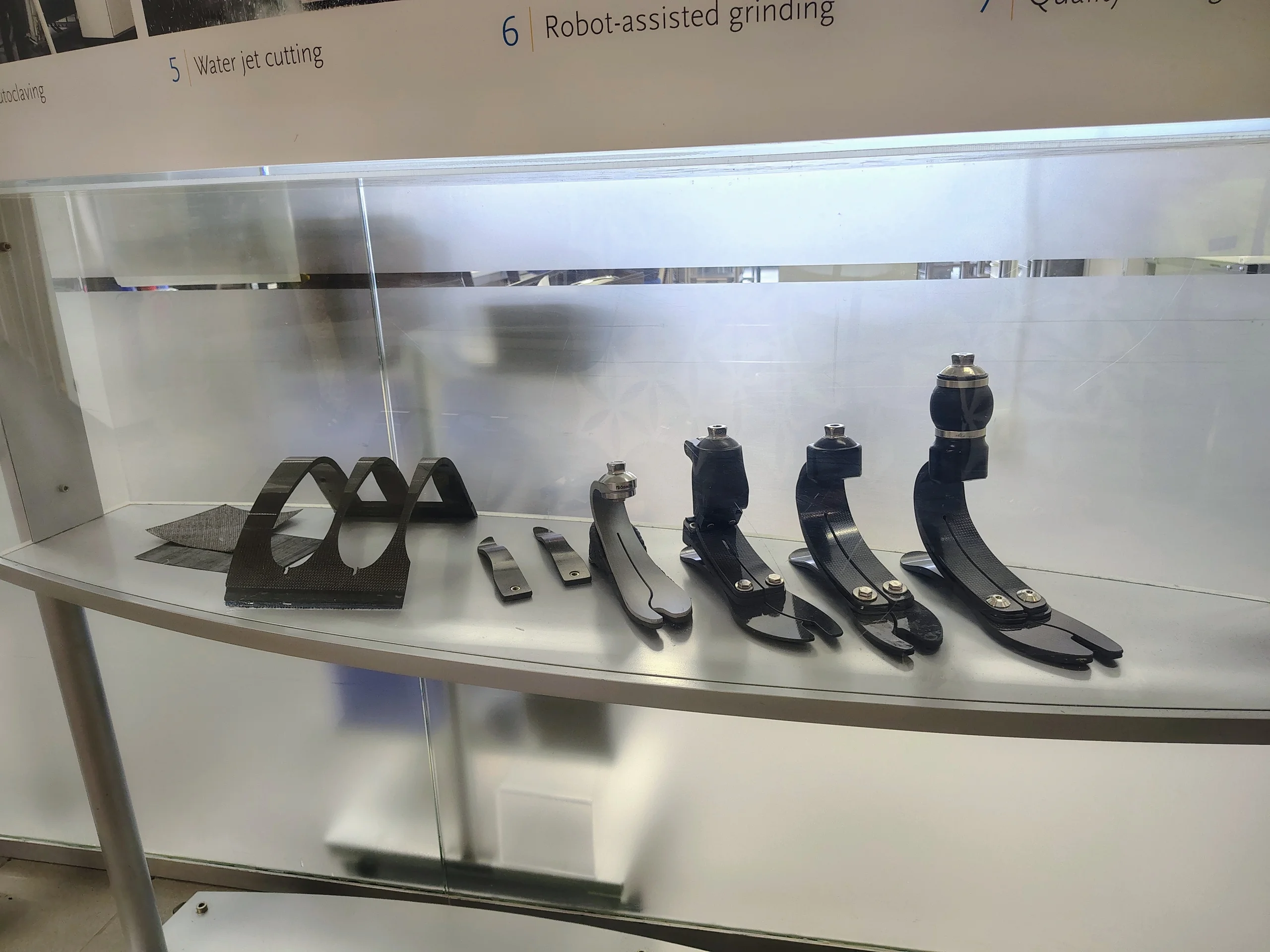
That may have been the most useful thing about seeing the facility in person. It is easy to talk about a “bionic leg” as though intelligence somehow lives inside it. Walking through the lab and manufacturing floor made it feel much less mysterious. The intelligence is spread across hundreds of decisions: how a sensor interprets movement, how software responds, how a magnetic field changes a fluid, how tightly two pieces of metal are machined, how an actuator is filled, and how many times the final assembly is tested before somebody is asked to trust it with their weight.
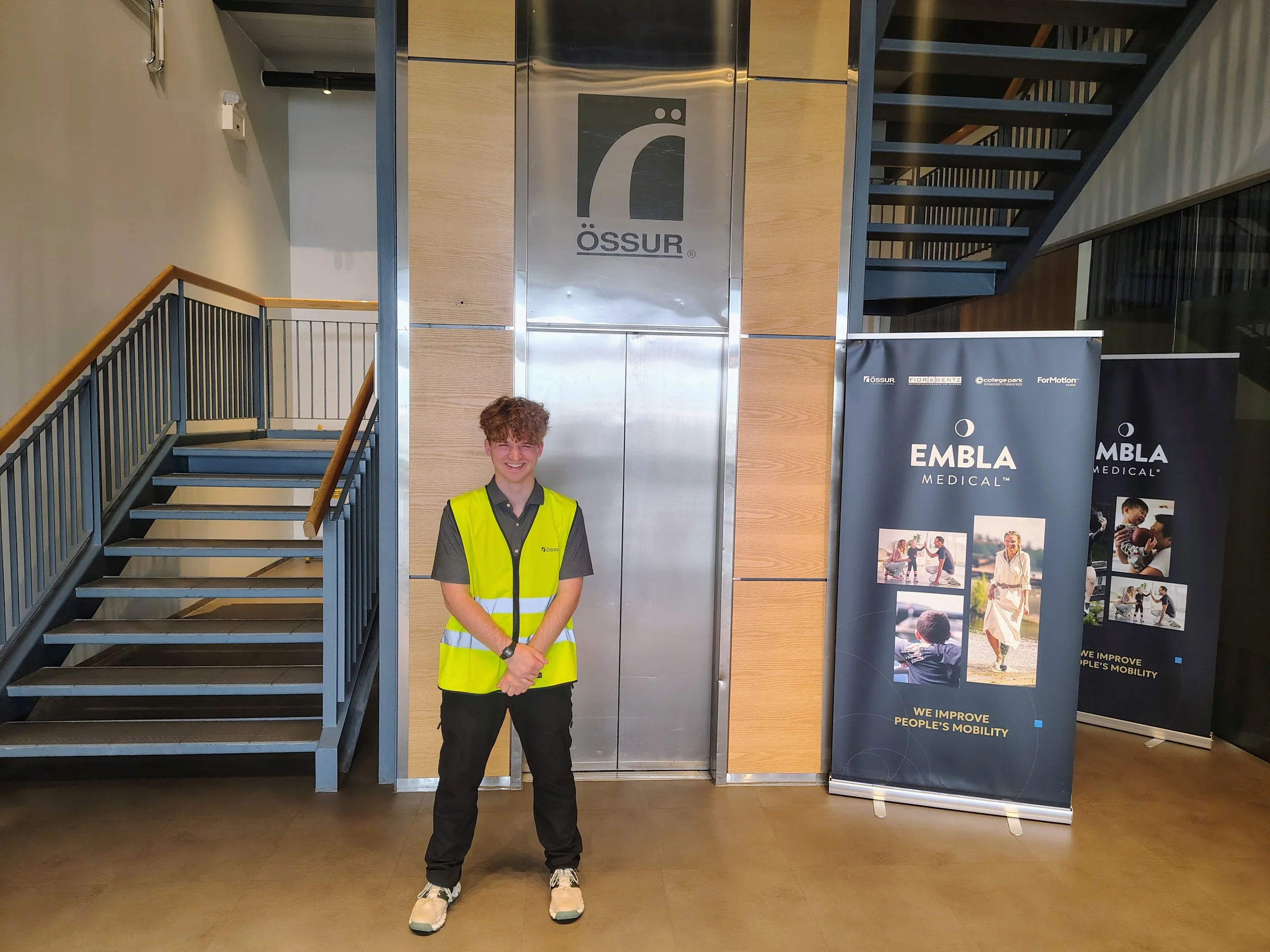
What I am taking away from Iceland is a stronger habit of looking past the finished device. I now find myself asking not only what a prosthesis can do, but what design decisions made that possible, what tradeoffs those decisions create, and how those choices might look different from the perspectives of engineers, clinicians, and users.