Tennessee, USA · Designed for Living
Inside Tennessee’s Prosthetics Network.
The Nashville–Chattanooga corridor in Tennessee is unique in its high concentration of prosthetic infrastructure. Within only a few hours' drive, the region hosts numerous clinics, a central fabrication facility, several adaptive lifestyle organizations, and a leading global manufacturer of prosthetics. This concentration makes Tennessee a useful setting to trace how decisions made in clinics and manufacturing facilities shape the final device, and ultimately the experience of the person who uses it.
- Organization
- FabCo Prosthetic Designs
- City
- Nashville
- Scope
- Central fabrication
- Date visited
- August 3, 2026
Beginning with the End in Mind
Designed for Living explores how prostheses shape everyday life. Before turning to that perspective, however, I wanted to take a step back and start at the beginning. At FabCo, I followed a clinician’s design through the fabrication process as it became a custom prosthetic socket.
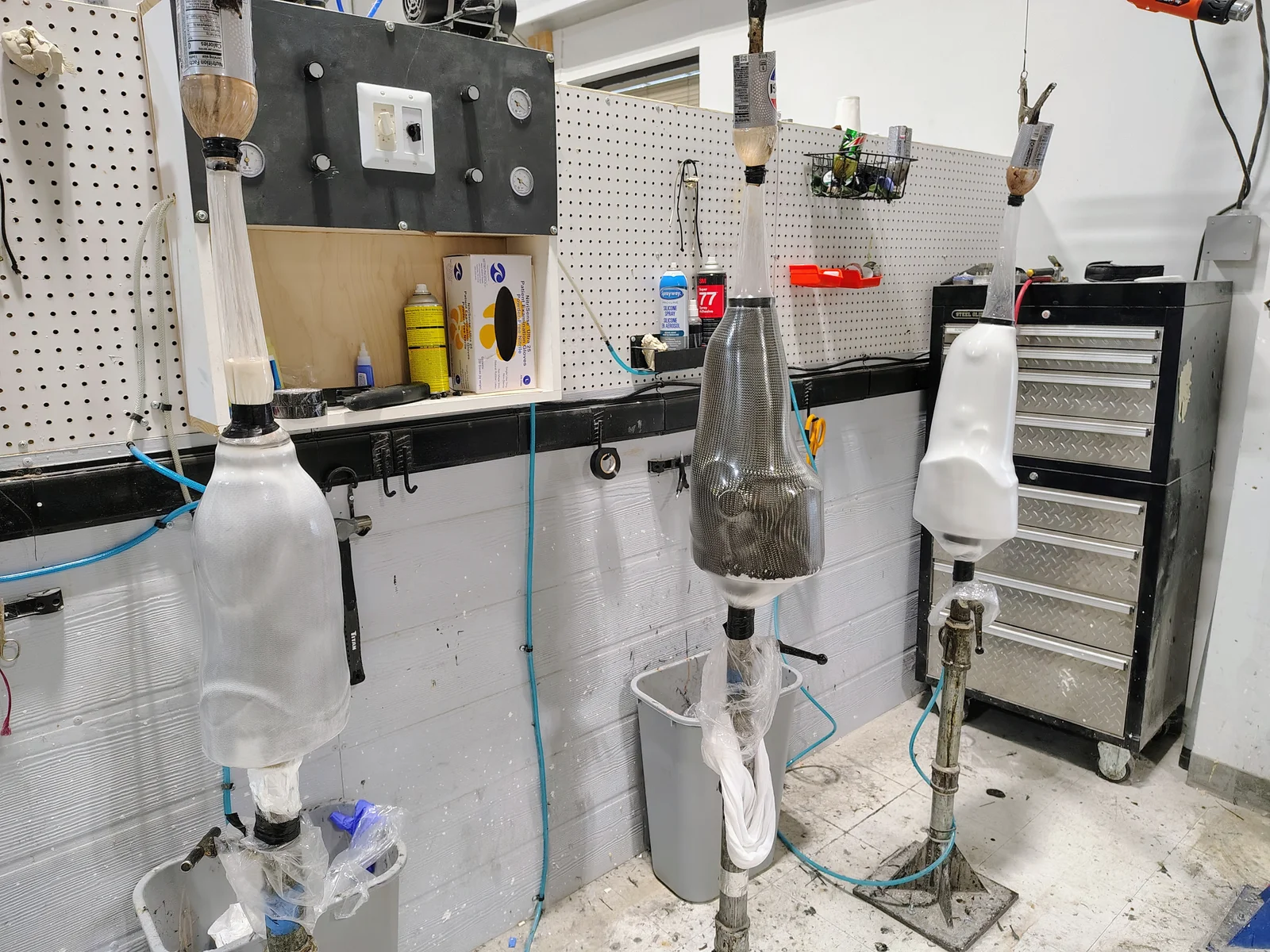
FabCo is a prosthetics-only central fabrication facility in Nashville, Tennessee, where clinics send casts, scans, test sockets, and detailed instructions. Depending on the request, technicians fabricate either a diagnostic socket for clinical evaluation or a definitive socket based on an approved design. The completed socket is then returned to the prosthetist. Each job moves through a series of specialized processes involving model preparation, plastic thermoforming, lamination, machining, finishing, and assembly. The work is distributed across a variety of dedicated rooms, including an area for creating plaster models, a space lined with grinders and cutting tools, and another equipped with rows of ovens for thermoforming.
A General Pathway for Lower-Limb Socket Fabrication
Once I understood how the shop was organized, the fabrication sequence became easier to follow. A typical lower-limb pathway begins with a rectified model of the patient’s residual limb anatomy. That geometry is first used to fabricate a temporary diagnostic socket so the prosthetist can evaluate and refine the design. Once the design is optimized, a new definitive socket is fabricated using stronger, more durable materials. The two stages may even be completed by different central fabrication facilities, and the exact process varies with limb level, suspension method, material, clinical approach, and the individual. As a result, the pathway described below is best understood as a general guide rather than a fixed recipe for every FabCo job.
-
Phase 01 · Capture & rectify
01Negative impression
A prosthetist records the residual limb’s shape with a cast or digital scan, along with measurements and clinical observations.
02Positive model & rectification
The negative cast is sent to central fabrication and filled to create a positive plaster model. The model is then modified to add relief and support where the socket design requires it.
-
Phase 02 · Verify & fabricate
03Thermoformed diagnostic socket
Clear thermoplastic is vacuum formed over the model to create a temporary diagnostic socket. The prosthetist uses this socket during a clinical fitting to evaluate fit, pressure, suspension, and alignment and to identify any changes the design requires.
04Definitive socket & wet lamination
Once the diagnostic design is approved, a new definitive socket is fabricated from that geometry. In a laminated design, reinforcing carbon fiber is arranged over a prepared model and consolidated with resin under vacuum. Some designs use multiple walls or laminations.
-
Phase 03 · Finish & fit
05Trim & finish
Trim lines are cut, edges and surfaces are refined, and the component position established with the diagnostic setup can be reproduced in the separate definitive socket.
06Clinical fitting & dynamic alignment
Back at the clinic, the prosthetist evaluates comfort and movement with the user, adjusts alignment, and continues refining the prosthetic system as it is used in real life.
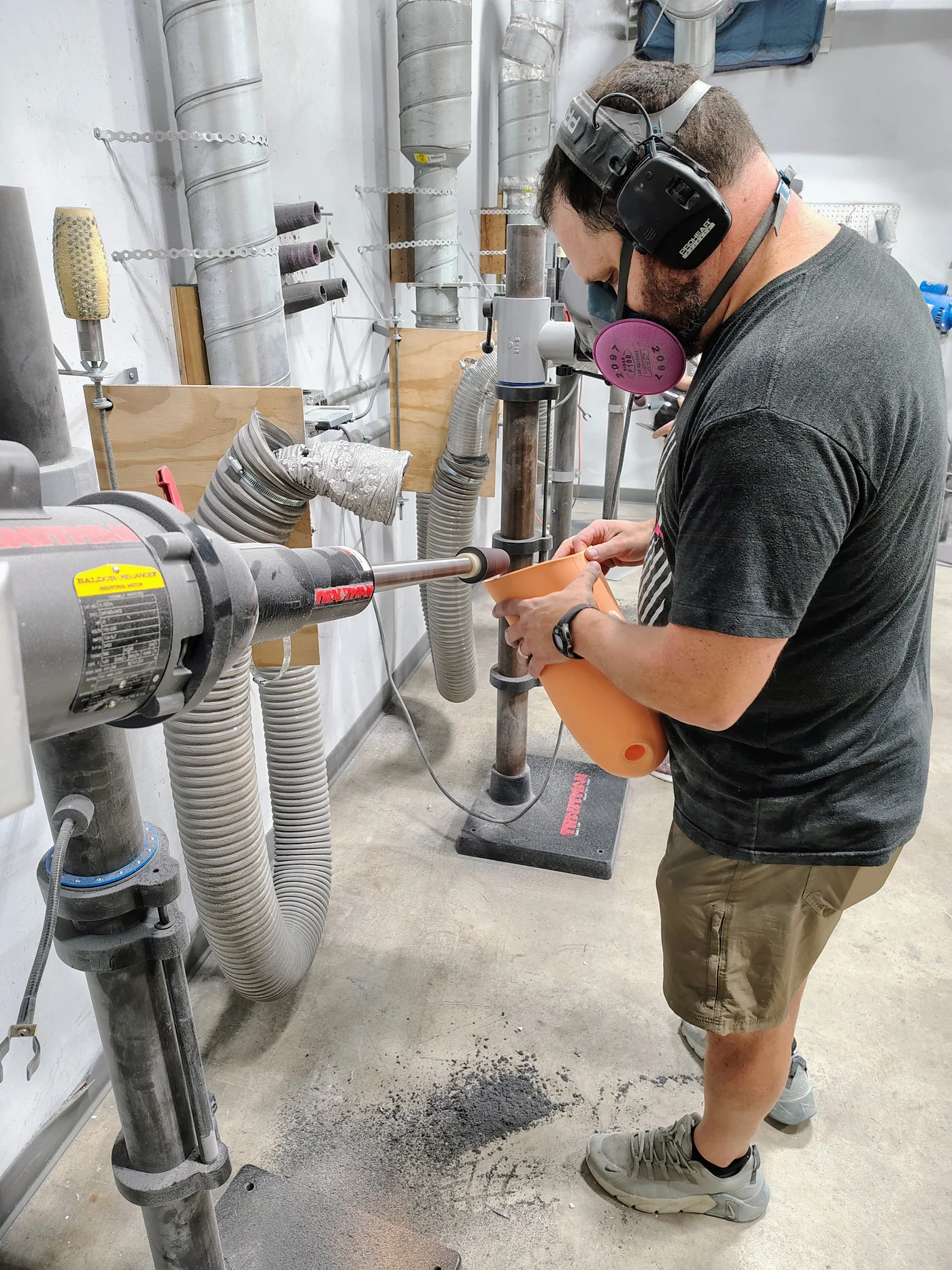
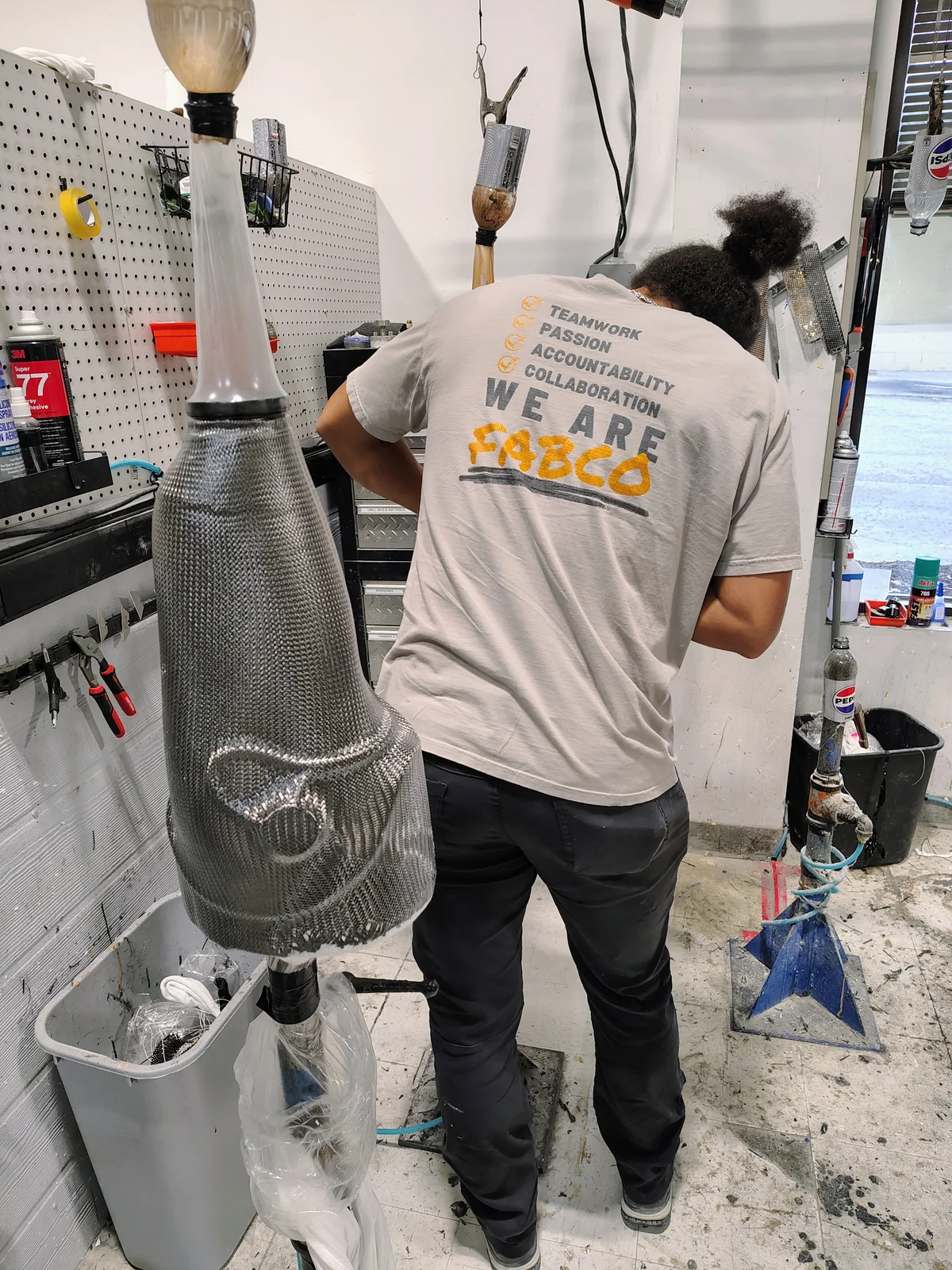
A Technician for Every Job
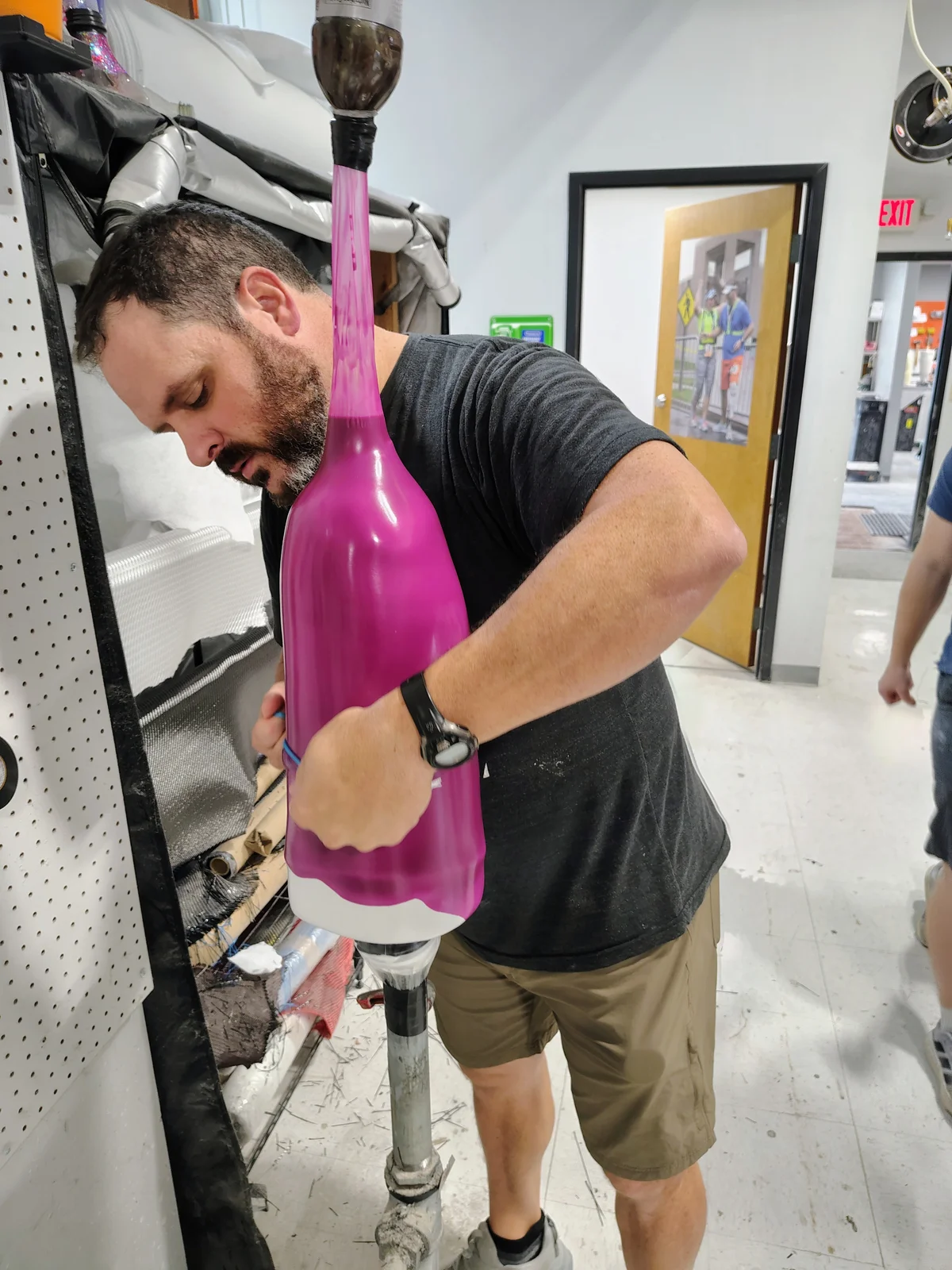
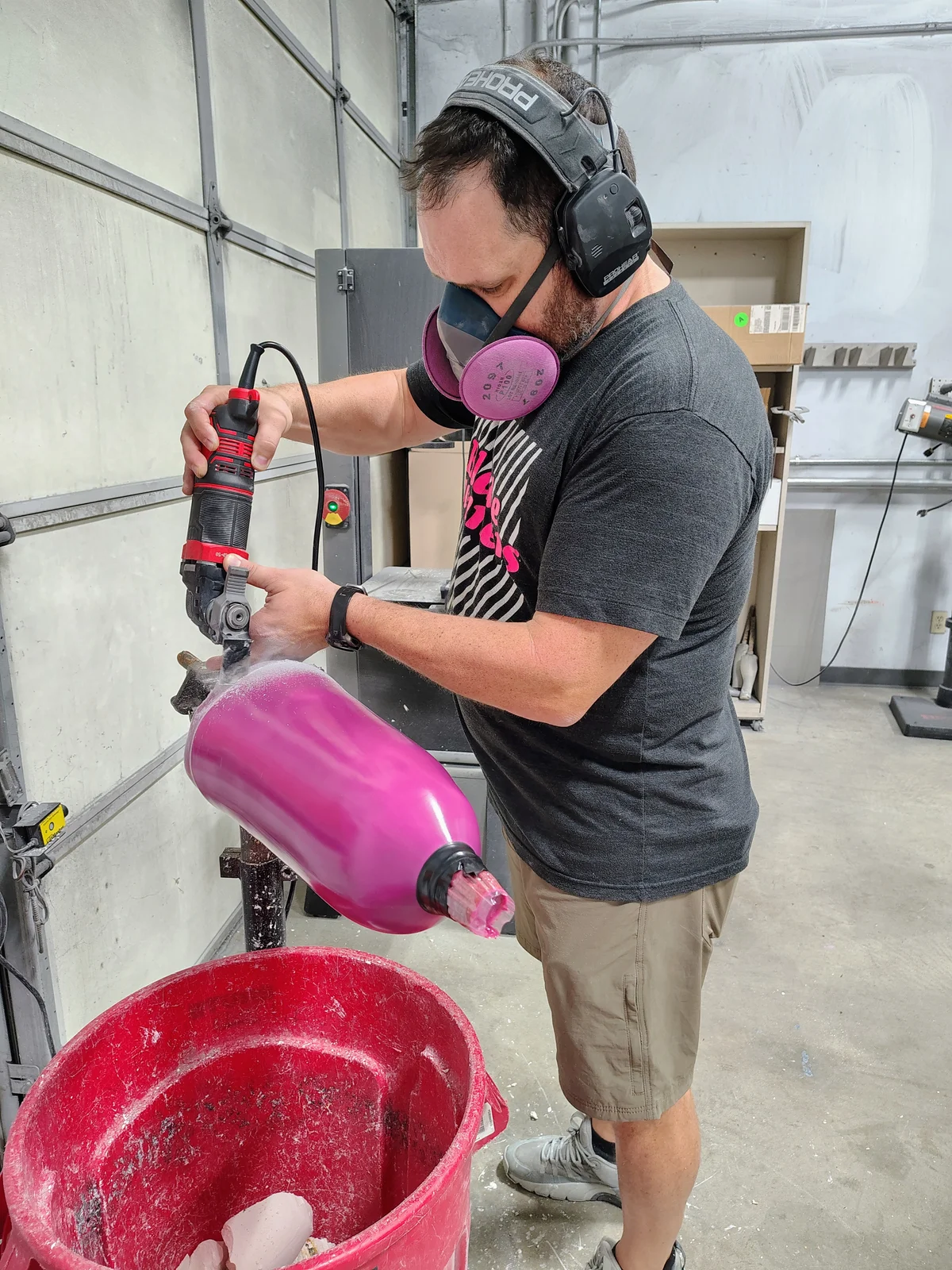
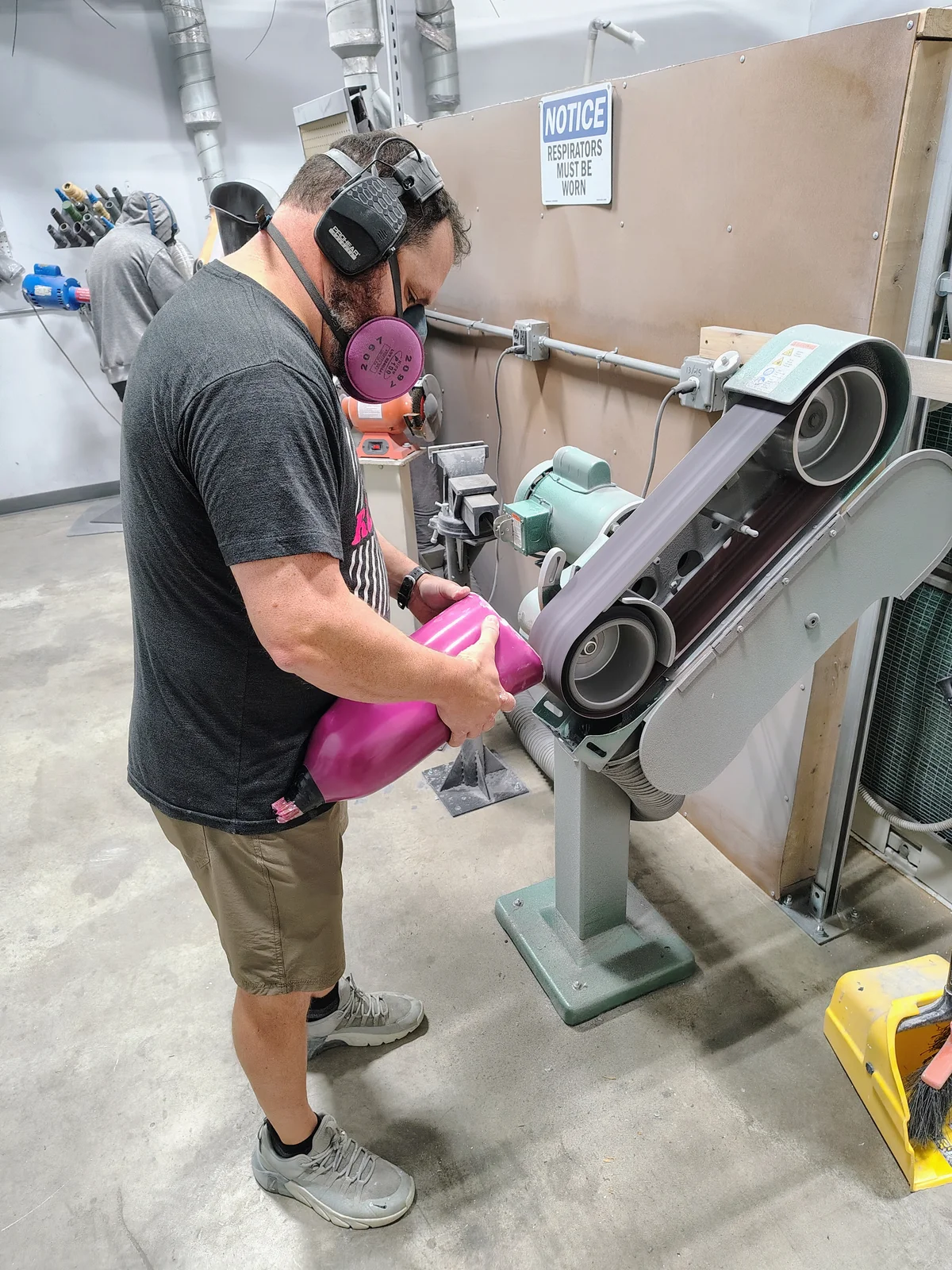
The work I observed was not organized as an assembly line with a new person taking over at every station. Each job was primarily assigned to one technician, who carried it through the major stages and could compare each new surface, trim line, and material layer with what came before.
That continuity matters because a socket is not a generic shell; it is built around one residual limb and one clinical plan. Keeping the same set of eyes on the device helps preserve those details while still allowing a second technician to offer another opinion when something looks wrong.
An Eye for Detail
Following the same device across the shop made it clear that fabrication depends on more than just completing a checklist. Throughout the morning, technicians paused to inspect surfaces and brought uncertain work over to others for a second opinion. A change in color, a blemish, a rough patch, or an unexpected indentation could point to a problem earlier in fabrication, such as an air bubble trapped during lamination. Recognizing these subtle irregularities and tracing them back to their source reflected the technicians’ practiced attention to detail.
The speed of those diagnoses came by way of experience. While written procedures establish a protocol, it is repetition that teaches a technician what normal variation looks like, where a defect begins, and whether it can be corrected without compromising the device. That practical knowledge is shared through questions on the floor, phone calls, shop visits, conferences, and candid feedback across organizations.
Upper Limbs Expand the Fabrication Framework
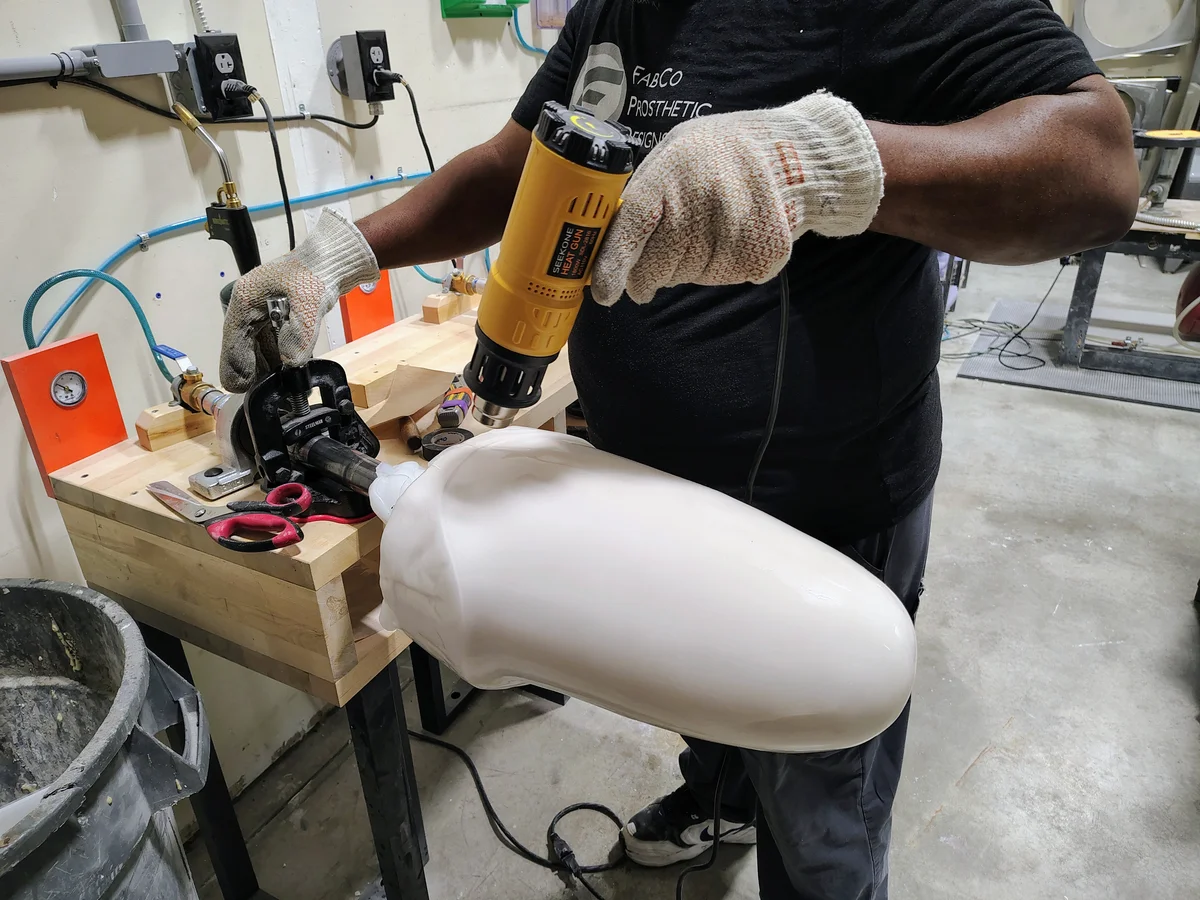
Lower-limb sockets often move through more consistent fabrication sequences, although every design is still individual. Upper-limb and specialty devices tend to follow less uniform pathways, as decisions about control method, component placement, suspension, range of motion, appearance, and intended use all shape the design. The shop therefore adheres to a flexible framework rather than one recipe for upper limb device.
New Tech Has to Prove Itself
FabCo’s experience with new technology showed how innovation can strengthen an established manufacturing process. The facility has adopted faster carving equipment and scanning software that can preserve socket geometry as an STL file for their records. These technologies improve efficiency and documentation while keeping other work in the skilled hands of technicians.
Not every innovation is ready for routine use, however. Not too long ago, FabCo acquired a 3D printer for producing diagnostic sockets, but inconsistent results and time-consuming troubleshooting kept it from becoming part of regular production. This experience was not a rejection of additive manufacturing. Rather, it illustrates how reliable a new technology must become before it can replace traditional techniques that have been refined and proven over time.
Glimpsing the Bigger Picture
By the end of the visit, FabCo felt much less like a standalone fabrication facility and more like one node in a national network. The team knew prosthetists I had previously shadowed, exchanged techniques with other specialists, consulted on R&D projects involving companies such as WillowWood and Fillauer, and maintained close relationships with local amputees and amputee organizations.
These relationships matter because a prosthesis crosses several kinds of expertise before it reaches the person who will use it: initial evaluation, design, fabrication, component engineering, fitting, and long-term adjustment. The person experiences the completed system, not the organizational boundaries behind it. Comfort problems, activity goals, component failures, and personal preferences become most useful when that information can travel back through the network.
- Organization
- Amputee Blade Runners
- City
- Nashville
- Scope
- Adaptive-sport nonprofit
- Visit timing
- Planned for Winter 2027
Coming soon
- Organization
- Fillauer
- City
- Chattanooga
- Scope
- Prosthetic manufacturing
- Visit timing
- Planned for Winter 2027
Coming soon