United Kingdom · Designed for Living
Prosthetic Care in the UK
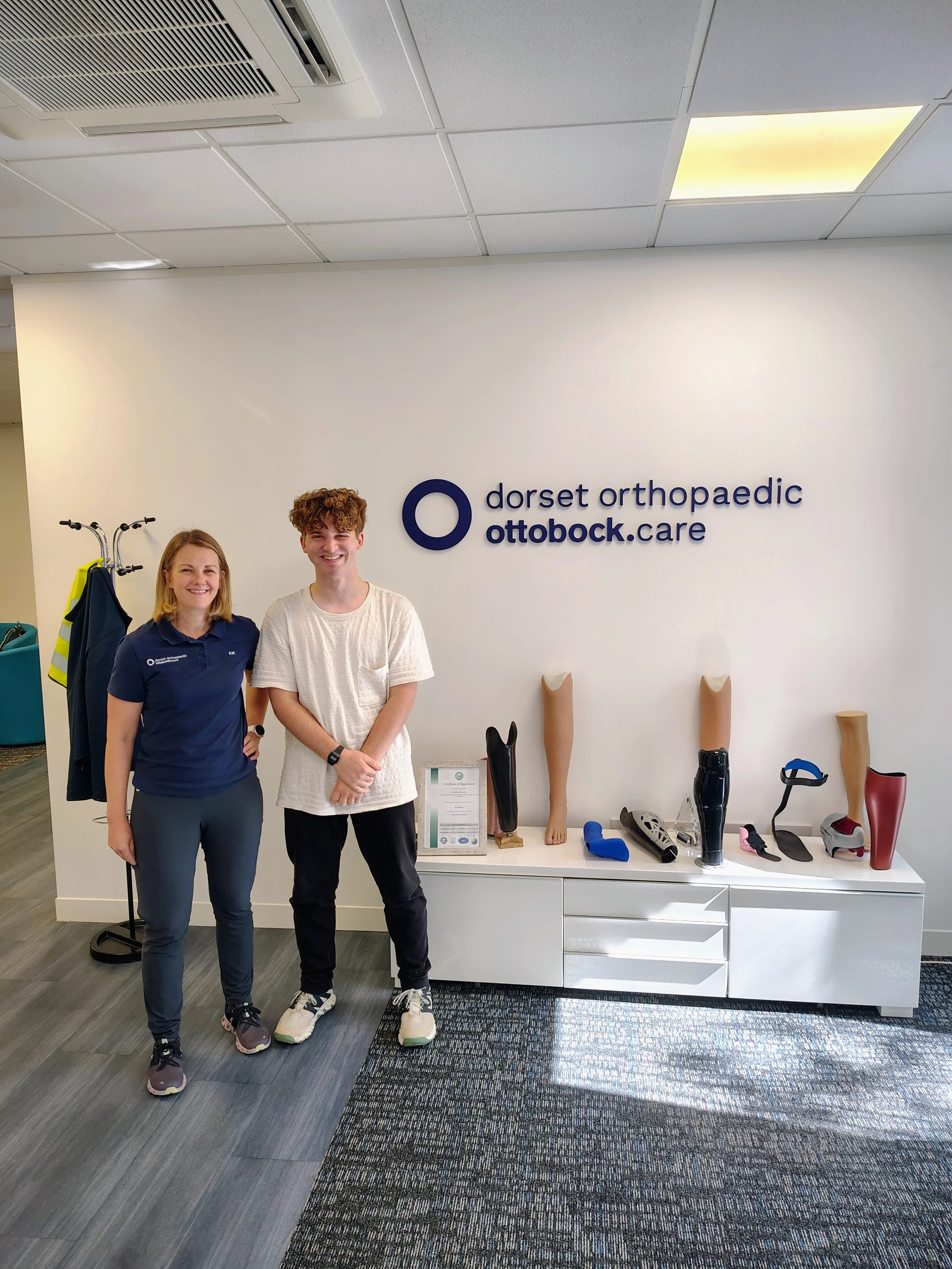
In Iceland, I investigated how certain prosthetic components were designed and manufactured. In the UK, my attention shifted more toward clinical care and the dynamic between a prosthetist, physiotherapist, and prosthetic user. Conversations with Dorset Orthopaedic clinicians and a visit to their Amersham clinic gave me a closer look at this relationship.
These encounters are part of a wider exploration of prosthetic care in the UK, from rehabilitation and funding to veterans’ support and the representation of limb difference in art. Each offers a different perspective on how a prosthesis becomes part of someone’s life.
- Organization
- Dorset Orthopaedic
- City
- Amersham
- Scope
- Clinical care
- Date visited
- September 1, 2026
- Organization
- Dorset Orthopaedic
- City
- Glasgow (virtual conversation)
- Scope
- Clinical care & osseointegration rehabilitation
- Date called
- September 16, 2026
- Organization
- Blesma
- City
- Chelmsford (virtual conversation)
- Scope
- Veterans’ perspectives
- Date called
- September 21, 2026
- Organization
- Victoria and Albert Museum
- City
- London
- Scope
- Photography & limb difference
- Date visited
- August 30, 2026
Two Routes to Prosthetic Care
Prosthetic care in the UK is available through the National Health Service (NHS), the publicly funded healthcare system, and through private providers such as Dorset Orthopaedic. NHS limb centres provide assessment, prostheses, and rehabilitation without charging eligible patients for that care. They support people with many causes of limb loss, including amputations following vascular disease or complications of diabetes, traumatic injuries, and congenital limb differences. Access does not depend on having a compensation claim or the money to pay privately.
Private care needs a separate source of funding. At Dorset, the clinicians described a caseload made up largely of people with traumatic injuries, often supported through personal injury compensation claims. Those claims can fund prostheses and rehabilitation through payments from the responsible party or its insurer. Other patients pay out of pocket. This helps explain why the patients and goals encountered in a private clinic may differ from those in an NHS limb centre.
Funding also shapes what each service can offer. NHS provision operates within public budgets and eligibility criteria, which can limit the range of components or rehabilitation available. Private funding may allow more options or more intensive support, depending on what is agreed and affordable. That does not mean advanced devices are absent from the NHS: NHS England funds microprocessor knees for patients who meet its criteria.
Before visiting Amersham, I met over Teams with a Dorset physiotherapist who had previously worked in the NHS. As she described her work, I noted that the biggest difference between her role and what I had seen in the US was that she and the prosthetist treated patients side by side in the same room. At Dorset, fitting and rehabilitation typically happened together, with both clinicians available to assess the same problem. While some NHS services use a similar setup, others separate the prosthetist and physiotherapist into different clinical spaces, even if they share the same building. Arrangements vary significantly between NHS centres.
She described how that partnership supported rehabilitation and component trials. If someone struggled to walk comfortably, she could assess their movement while the prosthetist checked the socket or alignment. They could then try various adjustments and determine which helped the most. The patient did not have to carry an explanation from an appointment with their prosthetist to another with their physiotherapist while each clinician tried to work out what the other had seen.
I had not previously encountered an in-house partnership between a prosthetist and physical therapist in the US. Without this integrated model, care was often siloed, creating a communication disconnect that hindered effective rehabilitation. I had seen patients spend weeks struggling with discomfort or difficulty putting on a prosthesis because the problem had not reached the person who could address it. While I had seen some collaboration between clinics and independent physical therapists, the clinicians never worked together in the same building. When I later took the Tube to Amersham, I wanted to see that partnership in practice.
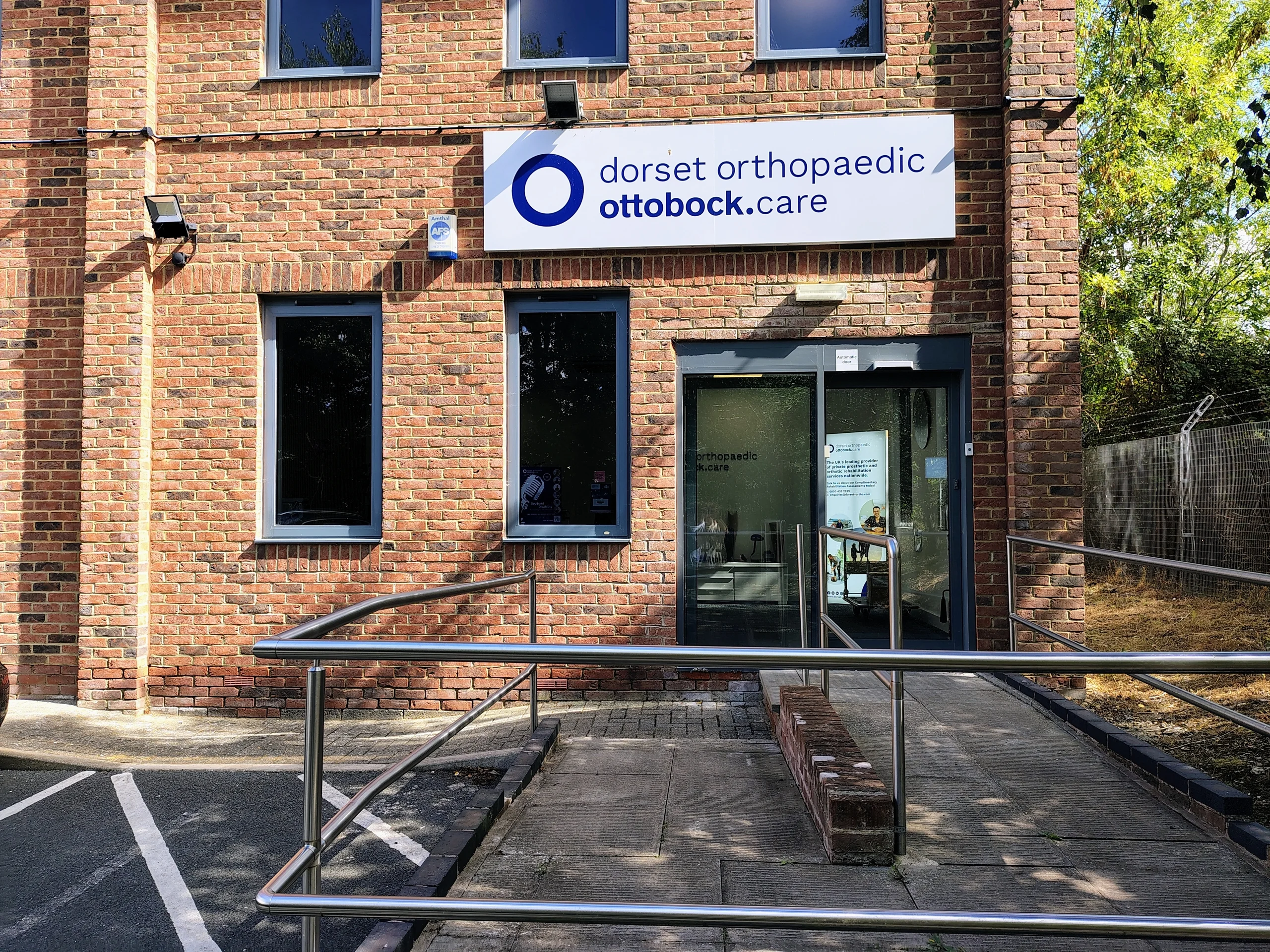
A Clinic That Does It All
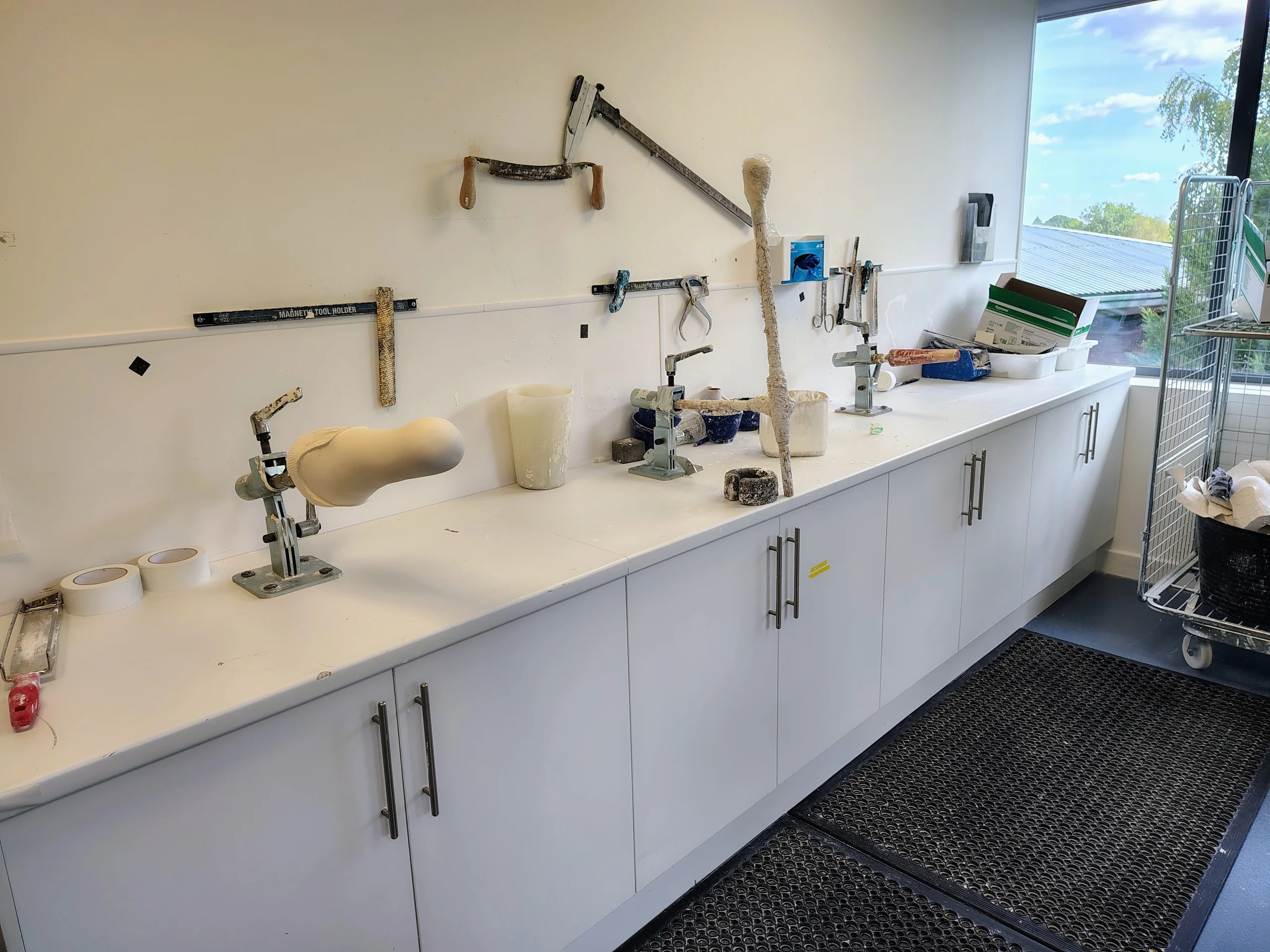
The first thing that surprised me was the size of the building. The clinic where I had interned in Kentucky had only a consultation room and a workshop. The prosthetist made plaster models and assembled and adjusted limbs in the workshop, but sent models to central fabrication facilities in Ohio and Tennessee for the check and definitive sockets. That arrangement kept the workshop smaller while also adding shipping time between stages.
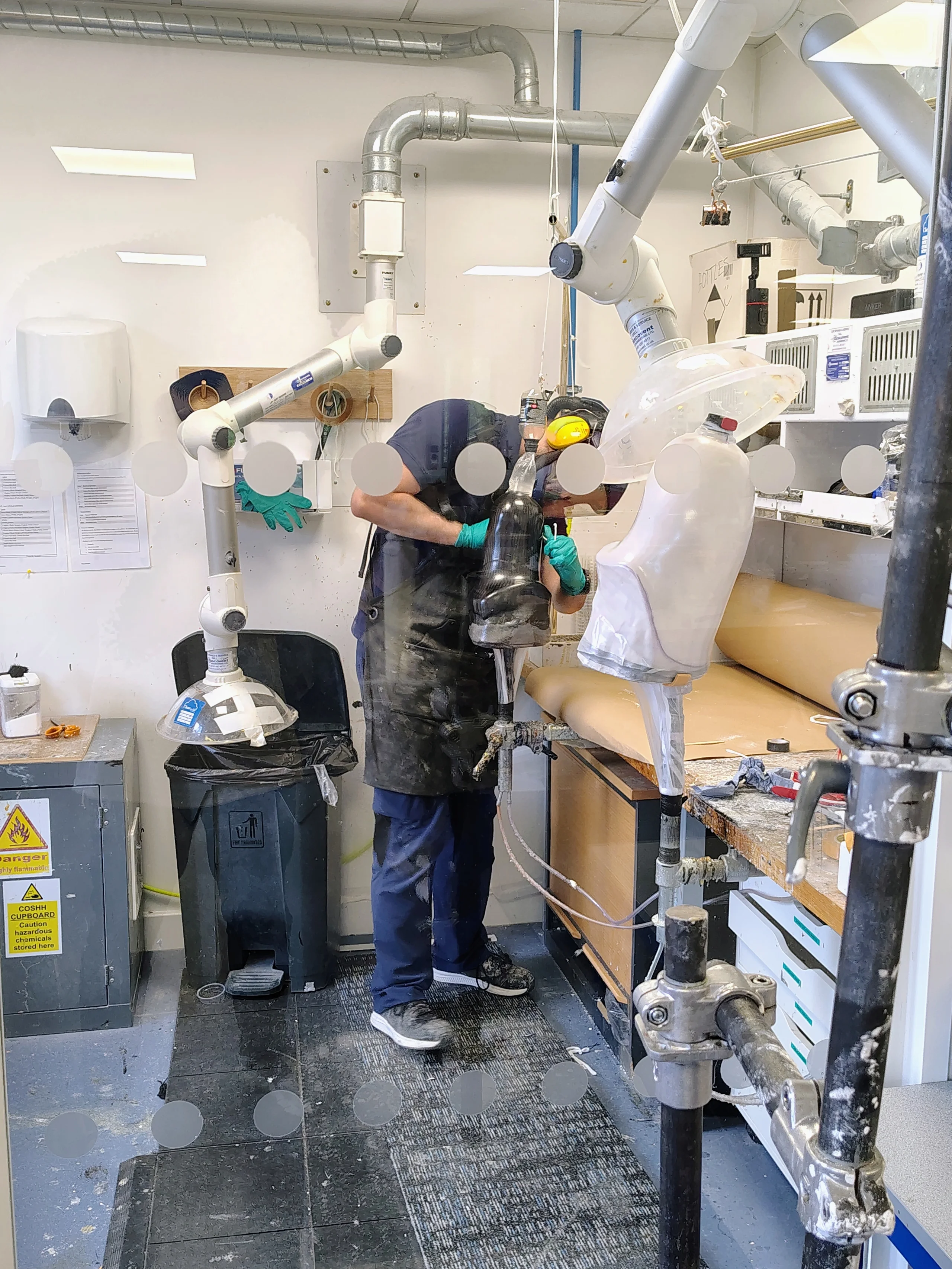
At Amersham, both check sockets and definitive sockets were fabricated in-house. Alongside consultation rooms and a physiotherapy gym, the clinic had spaces for plaster work, model rectification, and socket fabrication. Rectification is the process of modifying a model to guide the socket’s fit. Seeing the workspaces helped me understand why incorporating fabrication into a clinic changes both its footprint and the way people work within it.
A prosthetist talked me through the fitting process. As at the clinic in Kentucky, the team might work through two or three transparent check sockets while refining a patient’s fit. These temporary sockets allow clinicians to assess contact and comfort before making a costly definitive version. He explained that patients using them outside the clinic needed close review, often weekly, because the durability of the material can vary depending on the person’s weight and how they use the limb. In some cases, the team reinforced a check socket with carbon fiber for extra support. I had seen fiberglass reinforcement before, but carbon fiber reinforcement was new to me.
With a workshop in-house, I was curious if the team could cast someone in the morning and give them their check socket that afternoon. This way, the person could be cast and start walking on a temporary socket all in one day, rather than needing to schedule a follow-up appointment to receive their socket. The prosthetist said it was possible, although unusual and generally reserved for urgent circumstances. It was not the normal timetable, but having that option can matter a lot.
In Kentucky, I had met patients who traveled more than three hours each way for care. Consultation, casting, fitting, and adjustments could mean several journeys to the clinic and back before a limb was ready for regular use. An appointment’s cost often includes time away from work and transport. Combining stages, such as casting and check socket fabrication, cannot remove the need to check fit carefully, but it can reduce part of the burden of scheduling multiple appointments. Because of this, I began to think of fabrication capacity as an access issue as well as a manufacturing decision.
Who Can Reach This Kind of Care?
Seeing the workshop and rehabilitation spaces made the difference in funding tangible. A clinic may have the equipment and expertise to offer extensive care, but a patient still needs a way to pay for it. For someone with a personal injury claim, a case manager may help coordinate that process. Dorset’s published referral pathway describes clinical assessment, recommendations, reporting to insurers, and follow-up. This is a different route from relying on an ordinary private medical insurance policy to cover a prosthesis.
The team described an assessment as a way to understand the person’s life before deciding what services to provide. Work, hobbies, confidence, and the effects of the injury could all shape a plan, including recommendations for physiotherapy, occupational therapy, or psychological support. My understanding was that the clinic and case manager stay in communication as needs change. Receiving a leg is one stage in that process, though it does not necessarily mark the end of rehabilitation.
I asked whether maintaining relationships with established patients eventually overwhelmed a clinic that also accepted new referrals. The prosthetist described a changing rhythm of care in which appointments might be weekly during early fitting and rehabilitation, then fortnightly as the fit and the patient’s confidence improved. Once someone was comfortable using a definitive prosthesis, reviews could become six-monthly or annual, with additional visits when adjustments were needed. The pattern he described was not a fixed timetable for every patient, but it does highlight how keeping someone under the clinic’s care does not mean continuing the intensity of those first few months indefinitely.
People might also choose a clinic because of an established relationship rather than simply its distance from home. A team that already understands their history, goals, and prosthetic device could be worth traveling farther to see. Conversely, someone might seek ongoing adjustments closer to home once their initial rehabilitation is complete. This helped me understand that access was about both geography and continuity because the nearest clinic is not necessarily the one a person feels best understands their needs.
The Freedom to Prescribe
The physiotherapist told me that although Dorset is part of Ottobock Care, clinicians retain freedom of prescription. In other words, they can recommend components from other manufacturers when those better meet a patient’s needs. That distinction matters because the company that owns a clinic and the clinician choosing a component have different responsibilities and different priorities.
Public funding does not always mean that the NHS directly employs the prosthetic team. Some NHS services are delivered by contracted private companies, which may provide prosthetics, orthotics, or both. The patient still receives NHS-funded care, but the company running the service can change if the contract is awarded to a different provider. If that company also manufactures components, it may be both the employer of the clinician choosing a device and the business that benefits from its sale. That overlap makes freedom of prescription especially important.
One clinician described how this had played out in a previous NHS-contracted service. Under the original provider, they had been able to prescribe components from different manufacturers. When another company took over the contract, that freedom initially remained. Gradually, however, the new provider began questioning choices outside its own product range. Clinicians then had to complete a form justifying each outside component. According to the clinician, those additional requirements eventually became a directive to prescribe the company’s own products. What began as an administrative change had eventually narrowed the choices they could offer patients.
The clinician told me that this loss of prescribing freedom was a reason for leaving that role. I was particularly fascinated by how a clinician could remain in the same service while the rules governing their decisions changed around them. If a component from another manufacturer better suited a patient, clinical judgment alone might no longer be enough to make it available.
Choice alone does not settle whether a recommendation for a specific device is appropriate. The physiotherapist described using rehabilitation trials and evidence of benefit to support decisions, particularly when considering a more complex or expensive component. A trial involves giving the patient an opportunity to use a proposed component, with fitting and rehabilitation support, before committing to it. The prosthetist can adjust the setup while the physiotherapist helps the person learn how to use it. That gives the team a chance to distinguish an unsuitable device from one the patient simply has not yet learned to use.
The question is then whether the component offers a meaningful improvement for that person. Does it help with the movements they find difficult? Can they use its features comfortably and consistently? Does the benefit justify choosing it over a simpler option? These are the kinds of questions a supported trial can help answer. As I understood the physiotherapist’s explanation, the team needed to demonstrate why a recommendation made sense, rather than assume that more features meant better care. Having both a prosthetist and physiotherapist involved also meant the decision could draw on what happened during rehabilitation as well as what happened at the fitting appointment.
A member of the healthcare operations team at the clinic added another perspective. Having begun work at Dorset Orthopaedic prior to its acquisition by Ottobock in 2014, she described how joining the Ottobock Care network expanded the support around the clinic. HR, IT, marketing, and shared administrative systems became part of a much larger operation. In her account, the excellent clinical work downstairs did not change much, while the management and administration upstairs changed substantially. The clinic also gained access to a wider network of colleagues and resources.
Her earlier experience with Ministry of Defence-related work showed another side of how services are organized. She described contracts in which bidders needed to show more than their ability to manage an ordinary caseload at an agreed price. They also had to address factors like what would happen if conflict intensified and the number of injured service personnel rose sharply. She referenced the conflict in Afghanistan as an example of how a service needed the capacity to respond to an increase in demand, alongside the ability to deliver care quickly. The contract therefore had to consider how provision could expand when it was needed, rather than assume that patient numbers would remain steady.
These conversations made clinic ownership feel more complicated than a choice between independence and scale. A larger network can bring resources that a small practice would struggle to maintain. The question is how those resources support clinicians while preserving their ability to respond to the person in front of them.
Fit Before Features
When I asked the physiotherapist about her opinion on the biggest challenge in the clinical space, she returned to socket fit. This did not surprise me. However capable a knee or foot may be, it is difficult to benefit from it if the connection to the body is uncomfortable. This led us into a conversation about casting and how a socket’s shape is established. She told me that plaster casting was the main approach at Dorset, particularly for below-knee sockets, while noting that some other UK services had moved further toward digital scanning in recent years.
The clinicians anticipated wider use of scanning and digital fabrication in the prosthetics industry, but were cautious about whether the processes available to them could consistently produce the fit they wanted. A scan captures the limb’s surface, but clinical expertise is still needed to turn that shape into a socket that distributes pressure appropriately and remains comfortable in use. With plaster, those decisions take shape through the cast and the physical rectification of the model. A digital workflow changes the tools used to make them. I took their caution as a question about reliability within their workflow, rather than proof that scanning is inherently worse than casting. For them, adopting a new method depended on confidence in the resulting fit and whether they could rely on the technology for consistent results.
Upper-limb care brings a different set of challenges. The prosthetist estimated that roughly 85% of the clinic’s patients needed lower-limb care and around 15% needed upper-limb care, with much of the latter involving fingers or partial hands. With fewer upper-limb cases, practical experience can become concentrated among just one or two clinicians in a practice. A team may have several prosthetists without every member regularly fitting upper-limb devices.
I also asked about newer approaches to upper-limb devices, bringing up Open Bionics and Koalaa in a discussion about affordability, weight, and ways of simplifying provision. Part of that conversation concerned soft devices with interchangeable attachments. Koalaa’s approach, for example, uses a washable fabric sleeve that holds different tools for activities such as writing, cooking, or cycling. The device can help someone perform a particular task without needing to reproduce all the movements of a hand. Open Bionics represents a different approach. Its Hero Arm is a custom myoelectric prosthesis, using muscle signals to operate a powered hand, with a socket made from a scan of the user’s limb. Its Hero Gauntlet is a custom, 3D-printed partial-hand device whose fingers are operated by wrist movement.
The broader point I took from this discussion was that an attachment designed for a particular task is not a universal substitute for a conventional body-powered arm or hand. It may work alongside another prosthesis, or be the preferred option for a specific activity. Whether it is useful depends on the person’s remaining anatomy and what they want to do. Simpler construction can make a device more accessible without making it interchangeable with every other kind of upper-limb prosthesis.
We also discussed how a more complex upper-limb prosthesis can combine components from several suppliers. A hand might come from one company, a wrist unit from another, and a control system from a third. They do not all have to share a brand, but they do have to work together; the physical connections, power supply, and control signals must be compatible. Some combinations are supported, while others are restricted by a manufacturer’s design. A clinician therefore cannot select each part in isolation. Choosing a hand may narrow the available wrists or controllers, which makes compatibility another practical limit on freedom of prescription.
Watching the Conversation Become Care
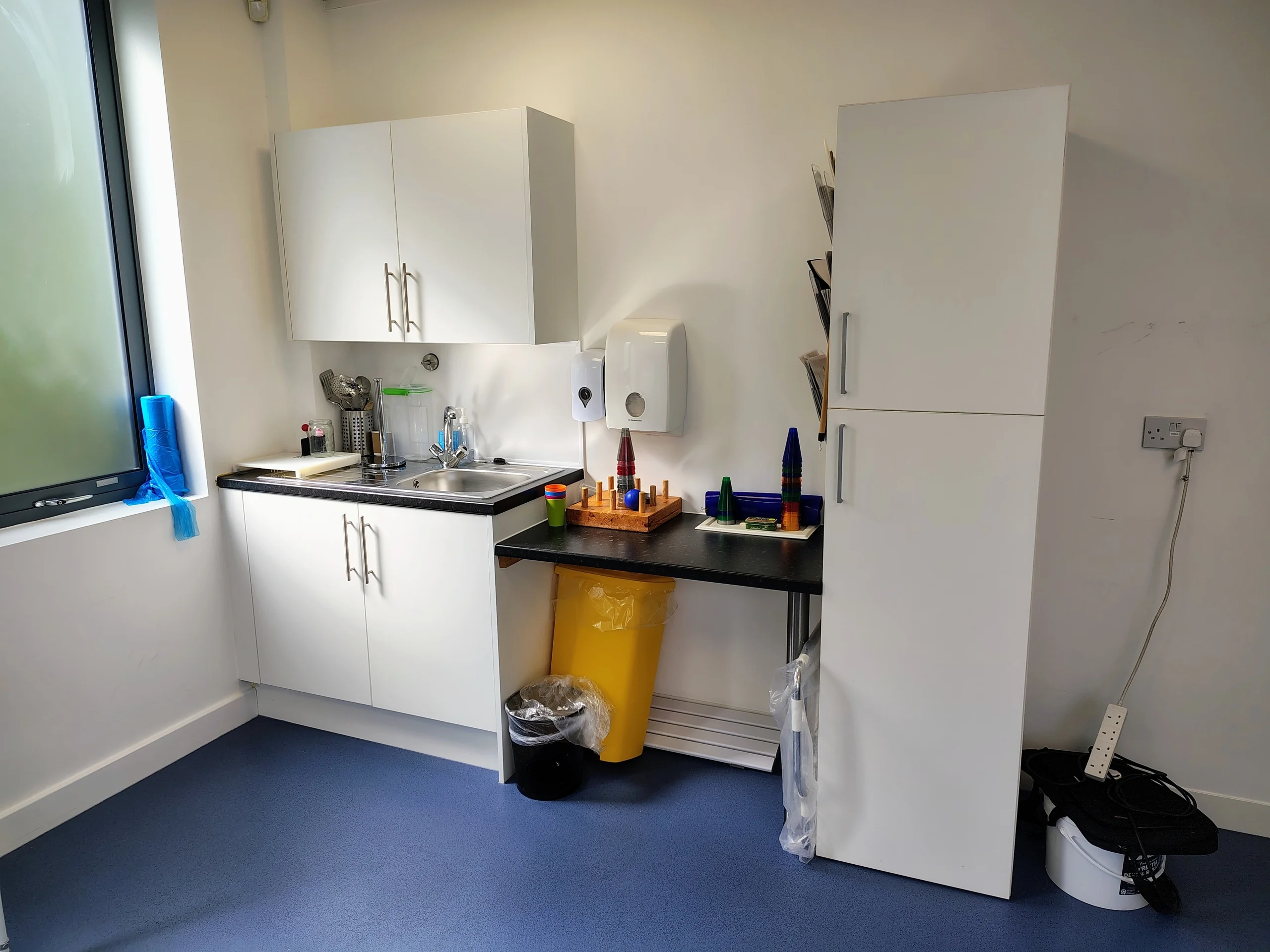
Back downstairs, I met a patient who had lost his leg above the knee in a bus accident. He had initially received care through the NHS and later moved to Dorset, where he was working with the physiotherapist. I did not establish why he changed services. I suspect it may have been for financial reasons—someone might begin NHS rehabilitation while waiting for a personal injury settlement or court-ordered funding to clear—but I do not know for sure.
He told me he had moved from a Blatchford Orion3 knee to an Ottobock C-Leg. I asked whether changing between two microprocessor knees had required much adjustment, and he confirmed that there had been a learning curve. This made a lot of sense. Every microprocessor knee operates differently, so mastery of one device does not make another immediately intuitive.
He also mentioned how he had originally been fitted with a pin-lock suspension system before switching over to a suction suspension system. The original pin-lock system created complications because the extra pin length lowered his knee's center of rotation, hindering his ability to walk and sit. The suction suspension resolved these biomechanical issues and greatly improved his comfort throughout the day.
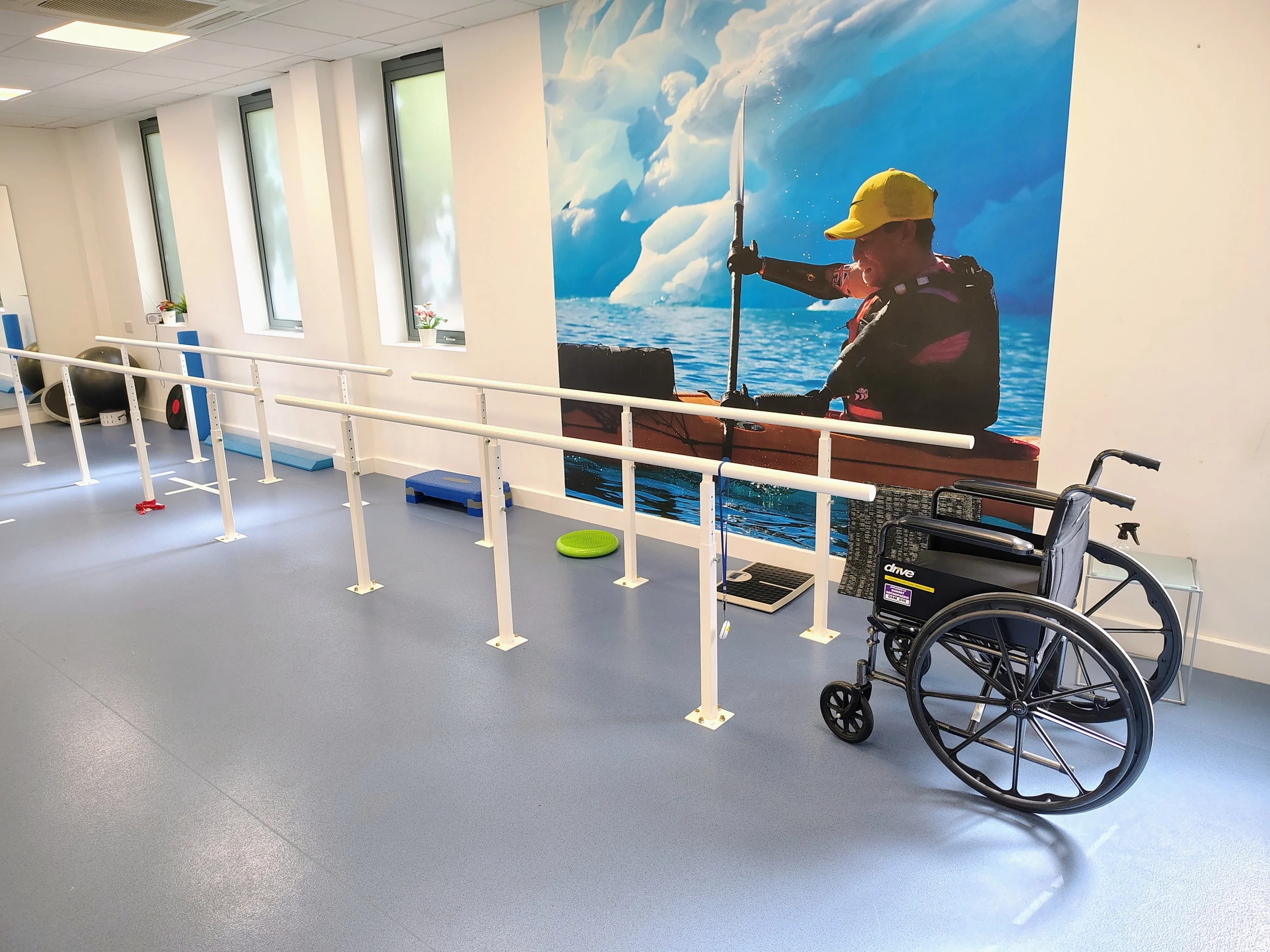
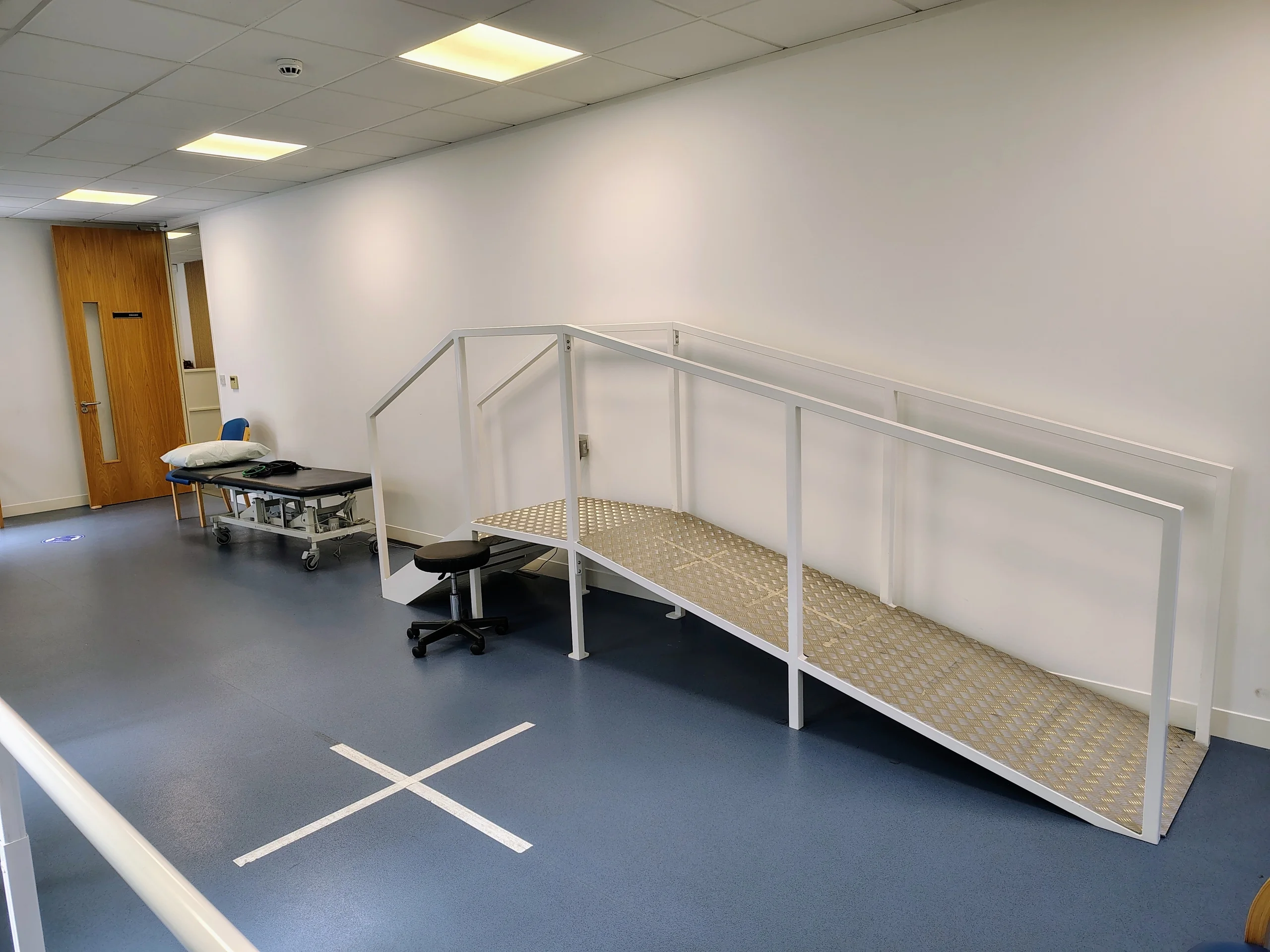
While the physiotherapist led exercises, a prosthetist made adjustments to the patient’s leg upstairs. When she returned with it, he put it on and began walking with both clinicians watching. The physiotherapist moved in front of and behind him, offering cues about his movement. She referred back to the muscles they had just worked on and encouraged him to bring that awareness into his steps. At the same time, the prosthetist asked how the knee’s resistance felt and considered its response during different tasks.
Here was the arrangement the physiotherapist had described over Teams, unfolding in front of me. If he found a movement difficult, the people addressing the device and the movement were watching the same motion. They could respond to his feedback, adjust their approach, and see what changed. There was much less of an opportunity for an observation to be lost between appointments.
The prosthetist also helped him use the knee’s phone app to explore activity settings. Ottobock describes MyModes as additional configurations developed with a clinician and selected through the Cockpit app or prescribed movement patterns. The prosthetist sets up the modes, and the user can then switch between those available to them. This allows a knee to behave differently for a particular activity without asking the user to program the device from scratch.
During the appointment, they found a preset setting labeled as “table tennis” and used it for a step exercise with the physiotherapist. As I understood the exercise, this particular preset mode locked the knee at a certain angle and kept it from giving way when his foot placement was imperfect, allowing him time to regain control and correct the movement. It was interesting to watch the prosthetist explain and adjust the device’s behavior while the physiotherapist turned that behavior into an opportunity to practice exercises.
Support Beyond the Clinic
During my visit, the physiotherapist also mentioned organizations that support people beyond their appointments.
- Blesma: support for limbless veterans; a separate conversation is planned.
- Limbless Association: information, advice, and peer support for people living with limb loss.
- LimbPower: opportunities and resources for physical activity, sport, and the arts.
- Amputation Foundation: support and resources for people affected by amputation.
- Steel Bones: another support organization the physiotherapist recommended I explore.
What I Took Away
In Iceland, I had been drawn to the coordination of mechanical parts and software. Amersham showed me another kind of coordination, in this case between a prosthetist and physiotherapist. The device remained central, but its effectiveness depended on this relationship. Before I left, the physiotherapist pointed toward changes she hoped to see shape the prosthetic landscape in the near future, including developments in osseointegration, scanning technology, device robustness, and battery life. Those conversations will be worth returning to.
A Scottish Perspective on Prosthetic Care
I arranged a Teams call with a physiotherapist and a prosthetist at Dorset Orthopaedic’s clinic near Glasgow. Both had worked in the NHS limb centre system before moving into private practice. Our conversation covered the organization of prosthetic care in Scotland, the opportunities and limitations of osseointegration, and some of the everyday problems that new technology still needs to solve.
The Glasgow clinic is smaller than the Amersham clinic I had visited. It is one of Dorset’s newest clinics, having opened about three years before our call. Unlike Amersham, the Glasgow clinic does not have full in-house fabrication capabilities because it is a smaller facility.
The Scottish NHS
Private prosthetic care in Scotland is broadly similar to private care in England, but the public systems have an important structural difference. In Scotland, NHS prosthetic services are delivered in-house, with clinicians employed directly by the NHS. Many English limb centres instead contract private companies to provide some or all of their prosthetic services. In those centres, colleagues working alongside one another may have different employers. For example, a physiotherapist might be employed by the NHS while the prosthetist works for the contractor.
Direct NHS employment changes the pressures surrounding a prescription. Clinicians still have to work within public budgets and funding criteria, but they are not also working toward a private contractor’s commercial targets. This creates a different relationship between the organization funding the care, the clinician selecting the components, and the manufacturers supplying them.
Both clinicians I spoke with preferred an arrangement in which the whole team was employed by the NHS. They valued the independence this could provide when selecting components and viewed NHS pay and employment conditions favorably compared with some contracted services. However, they also acknowledged a disadvantage. In their experience, addressing persistent performance problems could take considerably longer within NHS employment procedures than within a private contractor. Their preference for the in-house model came with an awareness of its limitations.
Space for Individual Care
One of the clearest differences between their previous NHS roles and private practice was the amount of time available for each patient. In a busy NHS clinic, a prosthetist often manages three or four overlapping appointments at once. This constant switching can turn the day into a form of clinical firefighting, where their attention is perpetually pulled toward the next immediate crisis rather than proactive care.
This leaves limited uninterrupted time to work through an issue carefully. A clinician might recognize that a fit or movement could be improved but have little opportunity to keep observing and adjusting. At the Glasgow clinic, appointments are generally one-to-one, allowing the clinicians to stay with the person and concentrate on the problem in front of them.
That time also allows rehabilitation to extend beyond the clinic. One woman with a transfemoral amputation was able to work with the team at a running track, giving them an opportunity to assess her prosthesis in the setting where she wanted to use it. Accompanying someone for this kind of session would have been difficult to accommodate in their previous NHS roles.
I also asked how the physiotherapist and prosthetist worked together when a patient was not in the room. Their collaboration includes discussing fees for reports and visiting case managers or professional contacts together. At other times, their responsibilities separate naturally. The physiotherapist might spend several hours walking with a patient while the prosthetist remains available at the clinic.
Their working relationship seemed comfortable and open. Each understood the boundaries of their expertise and was willing to acknowledge limitations or hear feedback from the other. Sharing a building made collaboration easier, but the quality of that collaboration also depended on being able to question an approach and recognize when the other person was better placed to help.
Private practice also brings commercial expectations. Both clinicians have sales targets and can receive bonuses for reaching them. Additional physiotherapy can be charged for, making the amount of rehabilitation provided both a clinical and a business consideration. As I spoke with the prosthetist, however, he indicated that the target was not his main motivation. He wanted patients to be able to take part in the things they enjoy, like running or going to concerts.
This reminded me of the link between reimbursement and prescribing, a recurring theme in my project discussions. In the United States, L-codes identify prosthetic components and features for billing, and the reimbursement attached to a prescription can affect a provider’s financial incentives. The UK practice does not operate through that US billing framework, and the clinicians’ bonuses are not tied to L-codes. Commercial pressure still exists, but a general revenue target is different from an incentive tied to the reimbursement available for a particular component or feature that may not be so beneficial for a patient.
Osseointegration and Everyday Life
The physiotherapist had considerable experience with rehabilitation following osseointegration, a procedure that allows a prosthesis to attach to an implant anchored in the residual bone rather than being held on by a conventional socket. I was particularly interested in how this technique impacts recovery, both for the patient and for the clinicians helping them return to everyday activities.
Many people pursue osseointegration for practical reasons. One patient’s socket would repeatedly lose its hold after only a few minutes of walking because of excessive sweating. Following osseointegration, he went on to complete a 15-mile charity walk. For many people who choose to undergo this procedure, the appeal lies in avoiding the hassle of repeatedly removing and refitting a socket throughout the day.
However, eliminating the socket introduces a different set of responsibilities because the new connection must pass directly through the skin. This permanent opening requires ongoing care and may produce drainage that needs to be managed with dressings. Because of this, some people find the idea of an implant extending through their skin difficult to stomach, even if the procedure would resolve their socket-related issues.
Anyone considering osseointegration must carefully consider their activity goals. Because high-impact activities place heavy loads on the implant and surrounding bone, they increase the risk of bruising or fractures. The risk of infection at the skin opening must also be carefully managed. Ultimately, specific restrictions depend on the individual's implant system and their surgical team’s guidance. Anyone considering the procedure should fully understand how these limitations might affect the activities they hope to enjoy.
The prosthetist’s opinion of osseointegration had changed over time. Five years before our conversation, he would have been much more likely to advise against it because of the risks. By the time we spoke, he considered it a reasonable option for certain patients, especially those with transfemoral amputations. In some cases, he believed it was clearly the right choice.
He also saw considerable potential in upper-limb applications. With upper-limb prosthetics, osseointegration intersects with implanted electrodes and other improved ways of obtaining signals to control a prosthesis. While a more secure physical connection and a more reliable control interface address different challenges, their development could certainly complement one another.
While the initial surgery for osseointegration is expensive, its long-term costs often match socket-based care. Although osseointegration eliminates the need for routine socket replacements every five years, it introduces other ongoing expenses. External components and connectors still require regular maintenance, and implant revisions remain a separate, unpredictable factor. Ultimately, both approaches can incur significant long-term clinical and material costs.
Rehabilitation After Osseointegration
I asked how rehabilitation after osseointegration differed from rehabilitation with a conventional socket. Many of the exercises and goals remain similar, but the early stages of osseointegration rehabilitation require particular attention to healing and to the amount of force passing through the implant.
Patients begin with a prescribed loading program before progressing to unrestricted walking. A scale can be used to measure the force applied through a training attachment connected to the implant. Pressing the attachment onto the scale gives the patient feedback on how much weight they are applying, allowing their clinician to increase the load in a controlled way as healing progresses. The duration and progression depend on the surgical protocol and the individual patient.
Walking is introduced gradually, with support tapering off as the patient gains strength and control. Patients typically start with two crutches or a walker. For those using a microprocessor knee, initial settings can be restricted to assist rehabilitation, then unlocked as ability and confidence grow. The ultimate goal is to build independence safely without overloading the healing limb.
Innovation and Practical Challenges
Our discussion shifted toward digital scanning and 3D printing. As I've mentioned in previous write-ups, 3D printing has massive implications for increasing accessibility in the prosthetics field. Because a single trip to the clinic could take six hours or more for patients living in rural areas, an appointment just to take a cast can require a full day on the road. These patients then have to repeat that grueling journey weeks later once the socket is ready to try. The possibility of shortening that process makes 3D printing particularly appealing to a prosthetist. Scanning, printing, and fitting a socket within a shorter time frame could reduce both travel and the time spent waiting between stages of care. Even though the clinic in Glasgow does not currently 3D print its sockets, this technology is steadily evolving into a more practical approach for everyday prosthetic care.
I asked the prosthetist and physiotherapist about the biggest challenges in prosthetic care. The physiotherapist’s answer was simpler than I expected and focused on something I had not anticipated: sweat.
Even a liner costing upwards of £1,000 can leave a patient covered in sweat, which inhibits the suspension of the prosthesis, allowing it to slowly slip off. The earlier example of the man whose socket repeatedly lost its hold shows how severely this can limit someone’s mobility.
If the interface between the body and prosthesis is unsound, the capabilities of the knee or foot become much less reliable. A liner that manages moisture effectively and remains secure could make an enormous difference to everyday use.
Can moisture be pulled away from the skin and collected somewhere, or allowed to escape through a more breathable material? Addressing these challenges requires exploring multiple avenues, from advanced moisture-wicking materials to active ventilation systems. Developing these solutions is especially critical for individuals living in extremely hot and humid climates, where heat-induced suspension failure poses a much greater daily obstacle.
Building Care That Can Be Sustained
Our discussion then turned to international access to prosthetic and orthotic care, focusing specifically on the need for affordable silicone liners and broader local services capable of supporting chronic care. Providing a prosthetic device is only the first step. True care requires a lasting local infrastructure to fit, maintain, repair, and adapt the device as the individual's needs change over time.
Both clinicians emphasized the need to develop a sustainable local workforce and industry in developing regions. Currently, many developing communities rely solely on prosthetic donations from countries with more established prosthetic care. While these donations meet immediate, urgent needs, patients still require adjustments, replacement parts, new sockets, and ongoing rehabilitation long after the initial fitting. Only a permanent local service can keep these prostheses functional and give patients a reliable place to turn when problems arise.
Digital fabrication could help address some of these gaps. Reducing the time and travel between assessment and fitting would be valuable wherever services are difficult to reach. However, a printed socket is only effective when integrated into a comprehensive care model that includes clinical assessment, fitting, rehabilitation, and long-term follow-up. Streamlining production is just one piece of building truly accessible care.
I left our conversation thinking about the dual paths of progress in prosthetics. While high-tech medical breakthroughs grab headlines, everyday practical improvements can be just as transformative for daily usability. These developments target entirely different challenges, raising the question of how we should best balance advanced engineering with the immediate, practical needs of the user.
A Veterans’ Perspective
I arranged a Teams call with the Prosthetics Support Officer at Blesma, a charity supporting limbless veterans. His role involves helping members navigate the prosthetic services available to them and resolving problems with their care. His understanding of prosthetic provision allows him to work between veterans and limb centres. Much of that work involves listening to what someone is struggling with, communicating those needs to the people responsible for their care, and following up when the system has not delivered what they need.
My conversations at Dorset Orthopaedic had focused largely on what happened within a clinic. This conversation widened that view to the contracts and funding decisions surrounding an appointment, and to the advocacy sometimes needed to make those arrangements work for an individual.
Communication, Contracts, and Clinical Choice
One key recurring theme of my fellowship project is the importance of communication in prosthetic care. A patient’s needs must pass between several people, and the longer that chain becomes, the more opportunities there are for something to be misunderstood or lost.
In some private clinics, the prosthetist, physiotherapist, and sometimes even the technician can join the same consultation. Everyone hears what the patient needs and understands their part in making it happen. This was familiar from what I had seen at Amersham, where fitting and rehabilitation happened with both clinicians watching the same movements and responding to the same feedback.
Larger caseloads and the organization of some NHS teams can make that coordination much harder. Professionals may work in separate departments, with physiotherapists based on another floor or sometimes even in another building altogether. Even when everyone is working toward the same goal, the patient’s care can become divided into separate appointments and separate conversations.
England has 35 specialist NHS prosthetic centres, but the experience can vary considerably between them. A national service specification determines what services are expected to provide. The local arrangements for delivering that care, however, depend on the NHS organization and, where a private provider is involved, the contract under which that provider operates. Those contracts help regulate staffing, responsibilities, and costs.
A company bidding for a contract might promise to deliver the service for less money without reducing access or the care offered. One way a manufacturer-owned provider can lower its costs is by using more of its own components. A manufacturer can supply its own clinical business at a different price from the price charged to an outside practice, creating a financial incentive to keep prescriptions within its product range.
For instance, if an outside manufacturer’s foot cost £3,000 and the provider could supply its own for £1,500, the apparent saving would be attractive. The important question, though, is whether that alternative actually meets the patient’s needs. A lower price offers little value if that device performs poorly for the person using it. The support officer emphasized that, in many cases, a foot could be half the price because it was twice as bad.
This led back to freedom of prescription, another recurring topic in my project. A company’s promise to preserve clinical choice does not necessarily ensure that clinicians feel free to exercise it. My contact spoke about instances in which clinicians received calls or emails from managers questioning why they had selected another manufacturer’s component. Repeated scrutiny can become pressure to prescribe the company’s own products, even without an explicit written ban on alternatives.
A Race to the Bottom
Competition driven too heavily by price risks becoming a “race to the bottom.” A lower contract price can look like a saving while gradually reducing the resources or flexibility available to patients. Depending on how a service is assessed, that deterioration can be difficult to see.
Appointment numbers are one example. Suppose a contract between an NHS limb centre and a private provider stipulates that the provider must accommodate at least 1,000 appointments per year. If 100 patients each return 10 times because their problems are not being resolved, the provider can record 1,000 appointments. That figure shows activity, but it does not show how many people have received an effective solution. While repeated visits are often a necessary part of prosthetic care and orthotic rehabilitation, an excessive number of returns due to poorly fitting components or recurring issues actually signals an inefficient use of resources and a decline in patient outcomes.
NHS England’s service specification does include expectations for quality and outcomes, including socket comfort. The concern is what happens when the practical emphasis falls on delivering a volume of appointments rather than on whether those appointments improve someone’s life. A busy service and an effective service are not automatically the same thing.
The NHS is not one organization with a single budget. Public funding moves through commissioning arrangements into individual providers and services, each managing its own financial pressures. A lower-cost contract can therefore appeal to an NHS trust trying to meet many competing needs. The difficulty lies in ensuring that reducing expenses within one budget does not leave the patient to pick up the consequences.
Staffing can also be influenced by similar pressures. Consider a scenario in which a contractor loses two prosthetists. This saves roughly £100,000 in annual salaries while its contract income remains unchanged. If those positions remain unfilled, the saving comes with a larger workload for the remaining team. A reduction in payroll can therefore appear financially beneficial even though the service loses experience and capacity.
In cases like this, prosthetists can find themselves being asked to do more with less for more people. In that environment, experienced clinicians may reach the point where they no longer want to work at a limb centre and instead transition into private care. Their departure then makes the workload harder for the colleagues who remain, creating another reason for people to leave and further perpetuating the “race to the bottom.”
While the NHS prosthetic care network successfully supports the vast majority of patients most of the time, these systemic pressures reveal its current vulnerabilities. The service operates admirably under standard conditions, but highly complex cases or exceptionally active patients can test the system to its limits. When these specialized needs interact with an already strained network, the resulting friction exposes the danger of a volume-driven model and shows how a “race to the bottom” detrimentally impacts patients who depend on exceptional care.
On Veterans
Veterans who experience limb loss as a result of military service are eligible for special prosthetic funding. Conversely, a veteran whose amputation resulted from an unrelated condition would generally access prosthetic care through the usual NHS arrangements. For example, a veteran who lost a leg due to an IED blast while deployed on active duty would qualify for this specialized funding, while a veteran who lost a leg due to vascular or diabetic complications unrelated to service would not.
For eligible veterans in England, the limb centre can apply to the Veterans’ Prosthetics Panel for additional funding. The panel was established in 2012 to help veterans access clinically appropriate prostheses of a standard comparable to those provided during military rehabilitation. Applications come through the NHS service rather than directly from the veteran.
This funding can expand the range of components available while the person continues to receive care from the same NHS team. One example from our conversation involved a veteran who received a Genium X4 rather than the standard C-Leg more commonly offered through routine provision. The primary distinction is the funding available for an individual prescription, rather than a separate clinic or an automatic entitlement to a particular knee.
In the officer’s experience, this mechanism generally works well. The extra funding does not, however, create more appointments or give the clinical team more time. Some cases from his work involved waits of six to eight weeks to return to a limb centre, followed by another three or four months of appointments to resolve the problem. Even though eligible veterans may have the money for a great prosthesis, the service needed to make it usable can remain stretched.
In exceptional cases, NHS-funded care can be arranged through a private provider when repeated attempts within the existing service have not met the veteran’s needs. This offers a way forward for people spending considerable time moving back and forth through appointments without reaching a workable result.
One case from the officer’s work involved a veteran who had lost both legs above the knee in Afghanistan while in his early twenties. An approved package of prosthetic care cost just under £200,000. According to the officer, that decision reflected the country’s commitment to meeting the needs of someone injured through military service. His role in that case was to help turn that commitment into care the veteran could actually receive.
Such private referrals are rare. The officer recalled only a couple dozen over his six years on the job. By his account, NHS services had managed the needs of the vast majority of veterans. However, this additional route still mattered significantly because it gave those with particularly difficult circumstances somewhere else to turn.
Our conversation also covered access to military rehabilitation services. During the conflicts in Iraq and Afghanistan, the Ministry of Defence’s prosthetic teams had developed extensive experience treating complex injuries and fitting difficult sockets. But as the number of newly injured personnel fell, there were fewer opportunities to maintain that experience through regular clinical practice.
This left two services with complementary needs: NHS centres had some veterans whose complex care was proving difficult to accommodate, while the military service had capacity and a reason to continue seeing those kinds of patients. According to the officer, Blesma brought representatives from the NHS and the Ministry of Defence together in London to discuss an arrangement that could help both.
The resulting approach allowed selected veterans to return to military specialists through the Complex Prosthetics Assessment Clinic. The service opened to veterans at Headley Court in 2016 and later moved with the Defence Medical Rehabilitation Centre to Stanford Hall. It gave NHS teams a route to additional expertise while helping military clinicians maintain their experience with complex prosthetic cases.
Access was deliberately focused. When the arrangement was introduced, Blesma described eligibility as including a War Pension or Armed Forces Compensation Scheme award for a service-attributable amputation, together with previous treatment as a prosthetics patient at Headley Court since 2006, when its in-house prosthetics service began. Referral came from the NHS limb centre and depended on the complexity of the person’s needs and the difficulties they were experiencing.
Obtaining a referral to either private or military prosthetic services from an NHS prosthetist can require care in how the conversation is framed. In many cases, a referral request can reflect the excessive time and resources that a case requires rather than a lack of clinical skill. A prosthetist may have the expertise to help but lack enough time in a crowded schedule to resolve a particularly difficult problem.
Acknowledging that distinction is part of the officer’s advocacy work. Seeking additional support can give the veteran a better chance of progress while reducing pressure on a team with many other patients to see. His role involves helping those discussions move toward a referral and the relevant funding approval.
Raising Awareness
Raising the profile of prosthetics and orthotics is an important part of Blesma’s work. These services connect with many other areas of healthcare, including diabetes care, trauma surgery, rehabilitation, and chronic care management. Their contribution continues well beyond the initial treatment of an injury, affecting whether someone can move comfortably, return to work, and remain independent.
Within the NHS, prosthetics and orthotics have historically been considered 'Cinderella services' because they are chronically underfunded, widely misunderstood, and frequently relegated to a low priority compared to high-profile fields like oncology or cardiology. This neglect is both financial and physical. Many limb centres are tucked away in hospital basements, far from the spotlight and funding given to major specialties.
To combat this perspective, Blesma has sought to raise the profile of prosthetics services at multiple levels by working with several audiences. Within the profession, this involves helping clinicians feel that their skills are recognized and valued. At the government level, it involves arguing for the importance of prosthetic care and the resources required to provide it well. With the public, it involves making the work more visible so that more people might consider entering the profession.
How We Choose to Be Seen
At the V&A, I came across several self-portraits by Japanese multimedia artist Mari Katayama, from her series titled tree of life.
The series grew from the artist’s interest in how images can be reproduced and reshaped, and how other people’s expectations shape our relationship with our bodies. She built the mirrored setting in her studio and photographed herself, taking control of both sides of the camera. As her gallery’s account of the work explains, that choice also explores the power a photographer holds over the person being photographed.
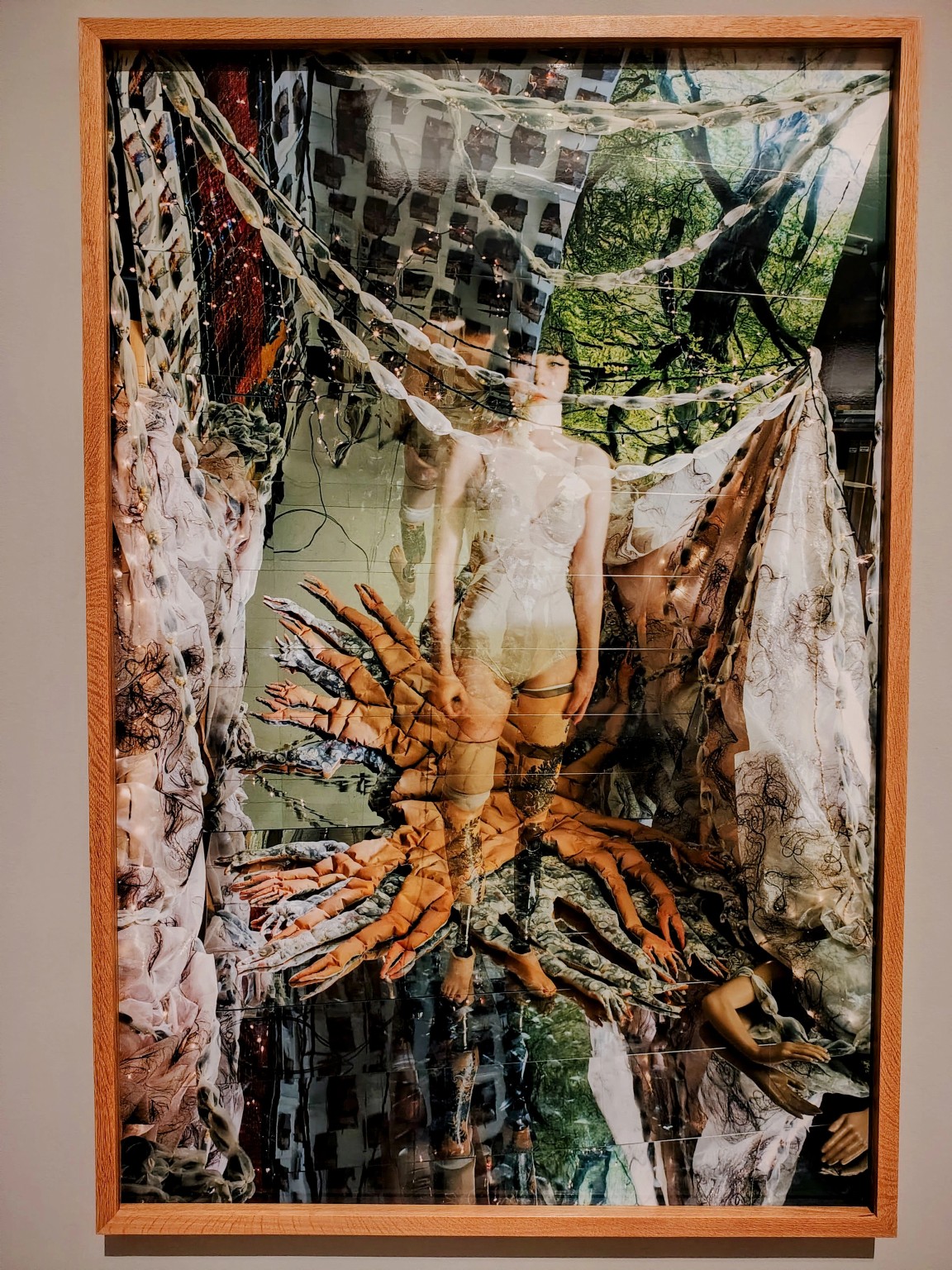
Much of my fellowship has involved asking how a prosthesis helps someone navigate daily life. These images prompted a different question: how much room do we leave for that person to decide how they are seen? The artist’s photographs invite attention without offering a simple story about limb loss. For me, their impact lies in that refusal to make a body immediately explainable.