Iceland · Designed for Living
From Iceland, Around the World
I came to Iceland curious about how a country with such a small population has helped shape prosthetic technology around the world. Much of that story leads back to Össur, founded in 1971 by Icelandic prosthetist and amputee Össur Kristinsson. Kristinsson's work on the Iceross silicone liner addressed an intimate, everyday problem by making the interface between a residual limb and a prosthetic socket more comfortable.
Össur’s work has since expanded across silicone liners and prosthetic components. It remains headquartered in Reykjavík, where it carries out R&D and manufacturing as part of Embla Medical, an Iceland-based organization that comprises several mobility companies. My visit offered a chance to follow the decisions and work that happen before a finished device reaches the person who will use it, a part of prosthetic care I have encountered often from the clinical side.
- Organization
- Össur
- City
- Reykjavík
- Scope
- Advanced manufacturing
- Date visited
- August 25, 2026
A Conversation About Design and Access
My visit began with a conversation with a product design engineer in Össur’s R&D team. With a background in mechanical engineering, he had worked extensively on the actuator that controls resistance in the Navii bionic knee. Navii uses magnetorheological (MR) fluid, which responds to a magnetic field to adjust how freely the knee moves. It occupies a broadly similar space to Ottobock’s C-Leg, but takes a different mechanical approach. Prior to our conversation, I was interested in learning about both the technology itself and how an engineer working on one component stays connected to the experience of the person wearing the whole device.
One of my first questions was how feedback from prosthetic users reaches the R&D team. I knew clinicians were involved, but wanted to understand what happens after they report a problem or suggest a change. The engineer described how feedback from certified prosthetists and orthotists (CPOs), who fit and work with these products, can inform firmware updates and future development. For instance, he told me about how feedback from CPOs in Germany had recently led to an update to Navii’s behavior when walking up inclines. This is how a person's experience on a slope could make its way back to engineers who can then modify the software controlling the knee.
He also described Össur’s work with highly experienced “Super Users,” who test products under demanding conditions. Their role prompted me to think about the purpose of a laboratory in prosthetic development. While controlled testing in a lab can isolate a movement or load, everyday life combines them in less predictable ways. Users who push their prostheses hard can reveal limits that might otherwise remain hidden. I found myself wondering how those insights pair with feedback from people whose priorities are quieter but just as consequential, such as comfort and confidence.
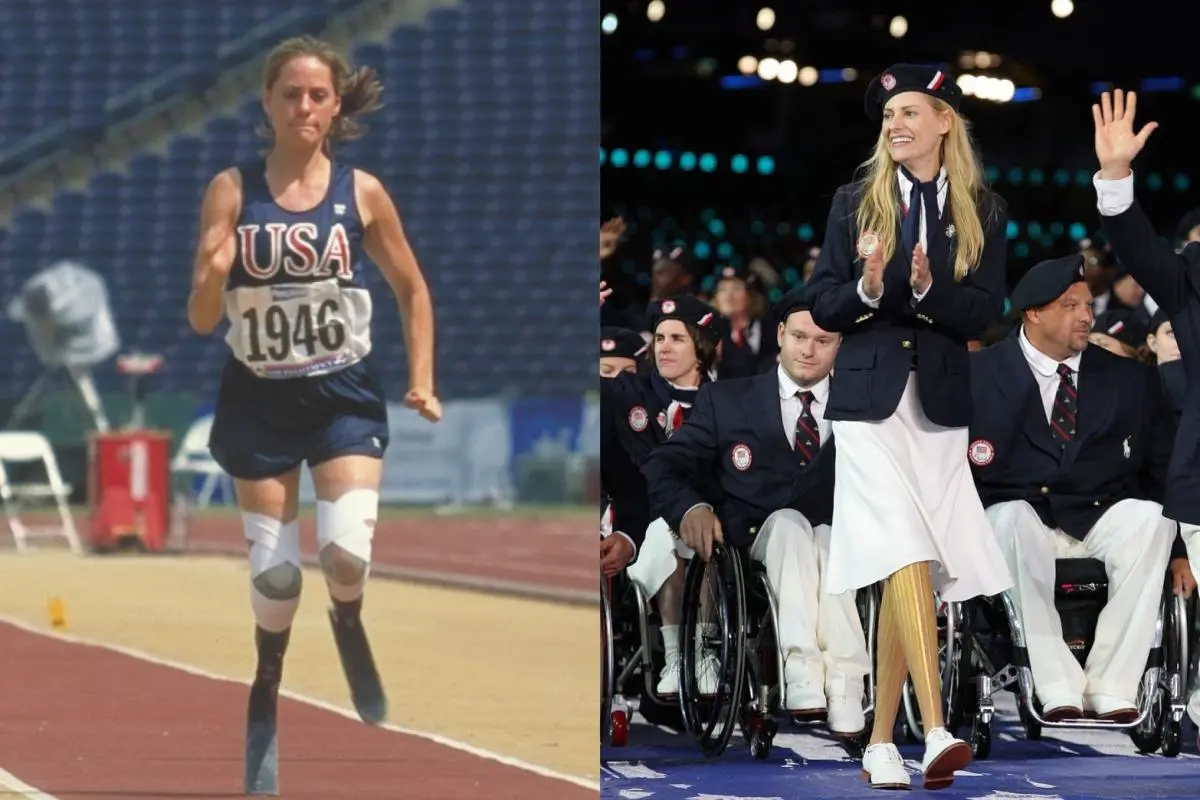
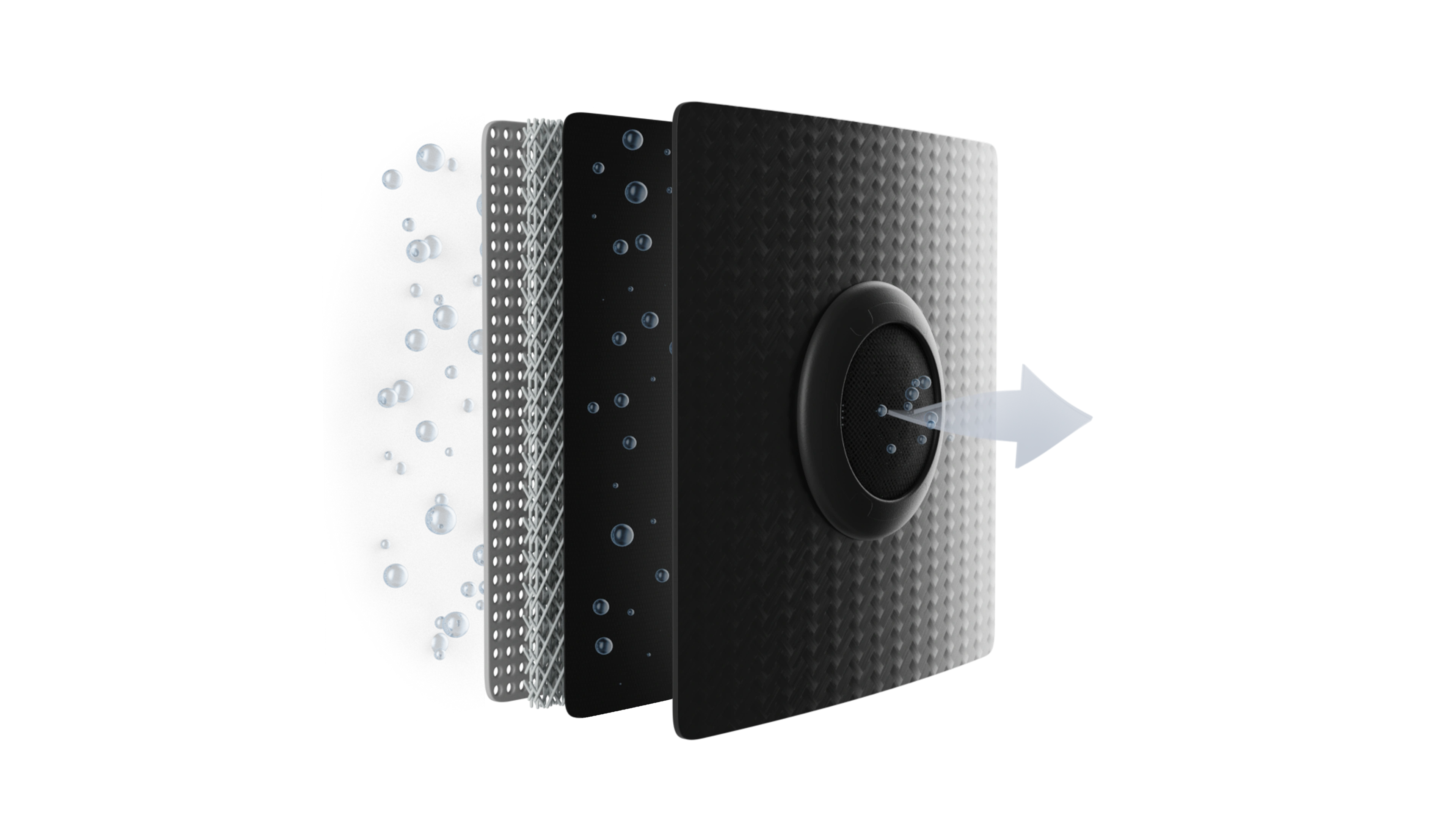
Our conversation gradually moved from the subject of user feedback to fabrication. Given my engineering background, I was especially interested in where additive manufacturing fits into the prosthetic landscape. I had seen several companies, particularly in the upper-limb prosthetics market, incorporate 3D printing into their work. The engineer described how Össur primarily utilized it to make prototype components for testing fit and geometry. Some specialized products, such as the AeroFit Seal-In® liner, use 3D printing in production, though most products rely on established methods such as injection molding that remain practical for making large quantities. This was a useful reminder that a manufacturing method has to make sense for the particular part and the scale at which it must be produced.
Our discussion about additive manufacturing at Össur soon shifted toward insurance reimbursement and how it shapes which technologies reach users. I wanted to know how far the influence of insurance reaches into product development. From our conversation, I understood that reimbursement considerations can enter the process well before a clinician selects a component. In the United States, providers use L-codes to identify prosthetic components and features when billing insurers, though having an applicable code does not guarantee coverage. Under Medicare, for example, clinical documentation must also establish why a component is medically necessary for the individual, including consideration of their functional abilities and potential. I had tended to think of access as something negotiated after the engineering was finished. Here, it seemed to be part of the environment in which the engineering happens.
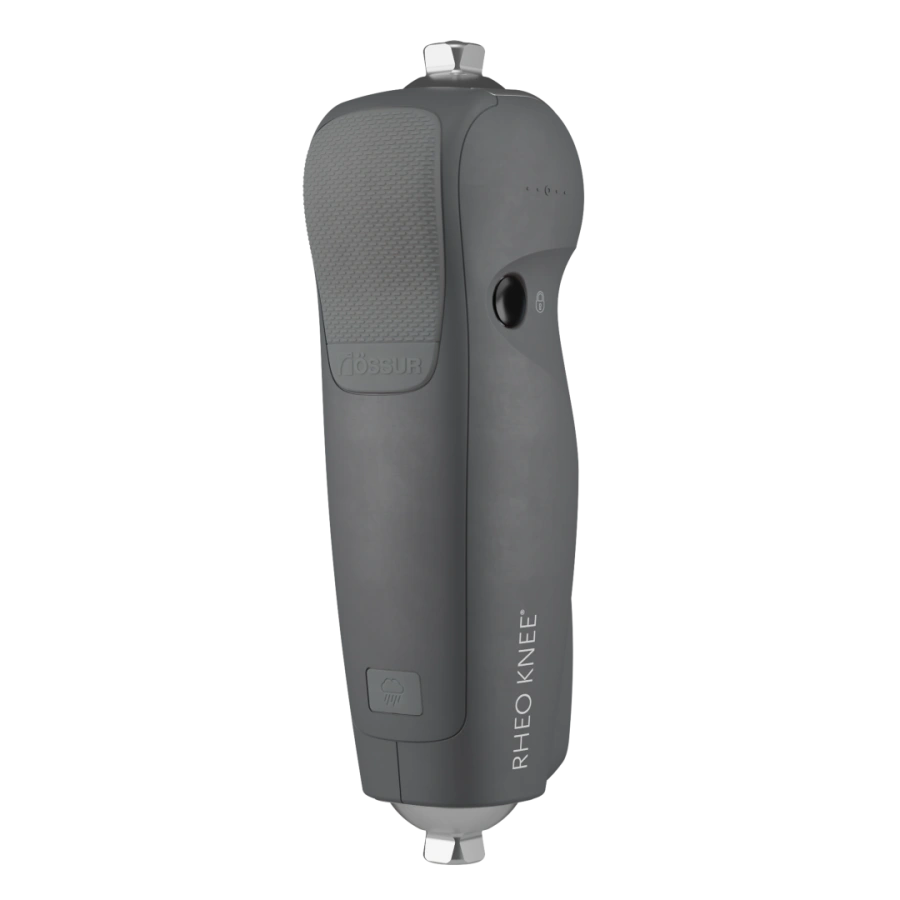
I think this can be better understood if we look at the relationship between the Navii and its predecessor, the Rheo Knee, and how they are sold in the United States. Both use a similar MR fluid mechanism to control knee resistance, but Navii offers additional features, such as being fully waterproof. However, while the Navii's suitability for more demanding activities may matter greatly to some users, many may not meet the criteria necessary to obtain one through their insurer. As I understood the engineer’s explanation, keeping the Rheo Knee available alongside Navii helps preserve options for users with different needs and reimbursement circumstances. This helped me see how insurance considerations can influence both product development and decisions about which existing devices remain available. I also took this as an example of why technological progress does not necessarily look like a clean handoff from one generation of products to the next.
I was also intrigued by the engineer’s awareness of the ethical tensions around reimbursement. We discussed how financial incentives within a payment system might influence component selection by a clinician, and what happens when those incentives do not align neatly with a patient’s needs. I would need a much deeper understanding of costs and reimbursement to assess that tension myself, but still, I was surprised to hear the issue raised by someone working in product development. I left wondering how manufacturers account for these pressures in the way they design and market devices, and where their ability to influence the outcome ends.
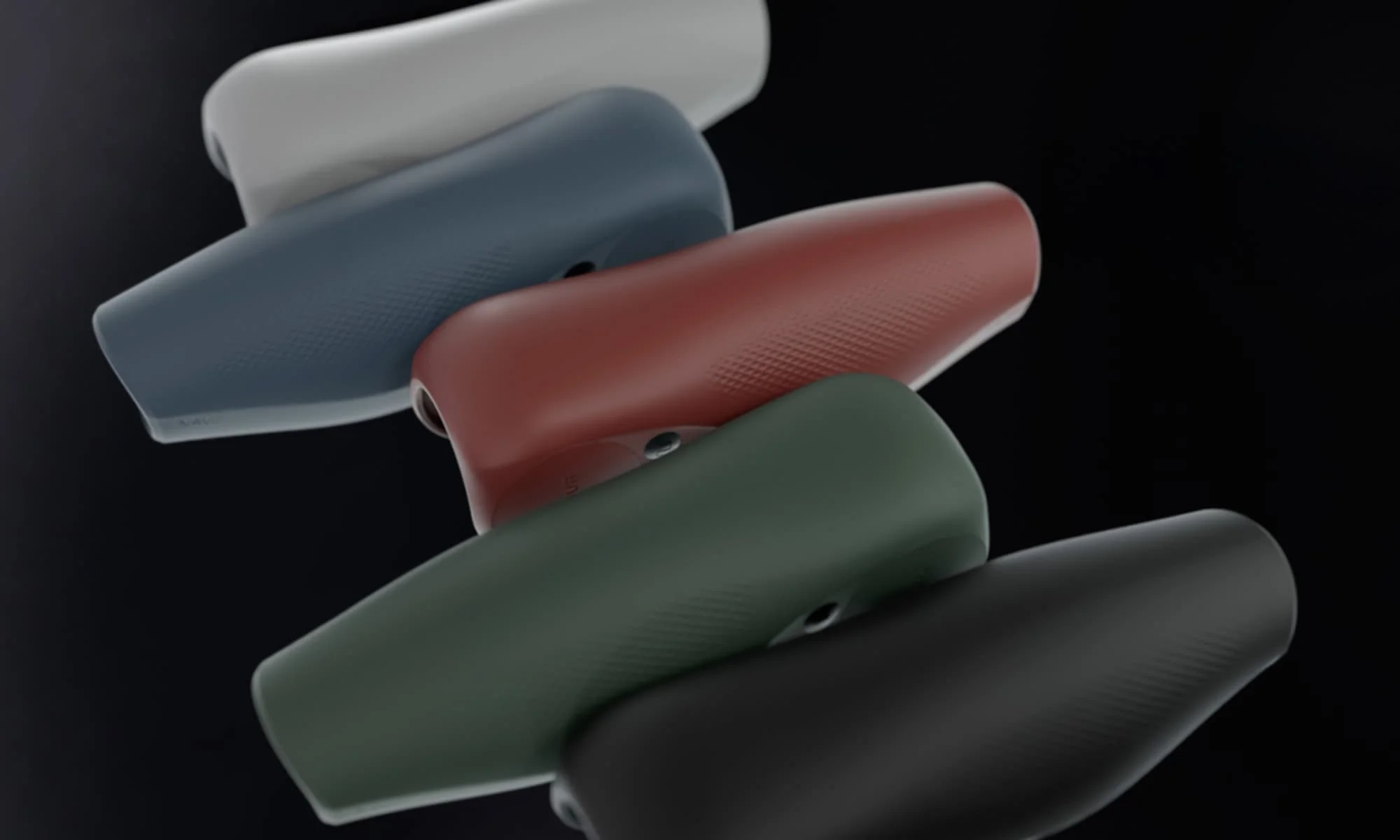
The conversation then turned to how a prosthesis looks. The engineer described a growing interest among manufacturers in making devices more visually expressive. Users have long personalized their sockets and covers with colors and patterns. What seems to be changing is how manufacturers are building those choices into their own product designs. Össur’s Earth Echoes covers for Navii, with colors inspired by Icelandic landscapes, offer one good example. Alongside protecting the components underneath, these covers give users another way to make their prosthesis feel like their own.
As we continued talking about self-expression, the engineer shared a story that gave me pause. A user in a developing country had told him about microprocessor prosthetic legs being stolen from people in broad daylight because of their high resale value. I could not independently verify this account, nor can I say how widespread it is. Still, the contrast made me reflect. Some people can personalize their prostheses and wear them openly, while others may feel compelled to conceal them. Choosing whether to make a prosthesis visible can be as much about someone’s surroundings as their personal preferences.
This comparison sheds light on the disparities in prosthetic care around the world. In the clinics I have spent time in, microprocessor knees were a familiar sight. They were expensive, but there were avenues through which people could obtain them. I expect such devices won't be as widespread in parts of the world where both their cost and the risks of wearing them might limit their use. Will I encounter them much in these regions? Who knows. This was a good reminder that the care I have seen so far represents a much narrower view of prosthetics than I have fully appreciated.
Before heading upstairs to the lab, we discussed another difficult aspect of access: the choices prosthetics companies make during war. Our conversation touched on Össur’s suspension of sales to Russia following the invasion of Ukraine, Ottobock’s continued involvement in the Russian market (albeit in a changed capacity), and both companies’ support for prosthetic care in Ukraine. I came away less focused on comparing individual corporate decisions than on the obligations that make those decisions so difficult.
This raises a complex question about the obligations of a medical technology company during war. Is mobility a human right that should remain protected regardless of political circumstances? Should a company continue supplying prosthetic technology to clinics in a country whose government is responsible for a war of aggression? Or does continuing commercial activity risk indirectly supporting a state that is committing serious human rights violations? At the same time, withdrawing from a market can mean that ordinary people lose access to technology that could profoundly affect their mobility and independence.
There is no simple answer here. What interests me is that prosthetic technology sits in a particularly uncomfortable place within this debate. These are medical devices, but they are also commercial products, and their distribution is inseparable from geopolitics, economics, and questions of access. A decision about where a company will or will not sell a prosthetic is ultimately also a decision about who gets access to mobility. I hope to continue exploring this question throughout the duration of my travels.
Understanding What's Inside
Upstairs in the lab, the conversation became much more technical. In clinical settings, I had mostly encountered prostheses as finished products fitted to patients. In the lab, the microprocessor devices became motors, circuit boards, metal plates, and wires. Seeing the parts laid out changed the way I understood the finished products. A knee that had seemed difficult to decipher from the outside started to make sense as someone walked me through what was inside.
Navii was the clearest example. The MR fluid we had discussed earlier contains tiny magnetic particles suspended in a liquid. Without a magnetic field, the particles move relatively freely. When a field is applied, they align in ways that make the fluid resist shearing more strongly. Changing the field alters that resistance, giving the knee a way to adjust how freely it bends.
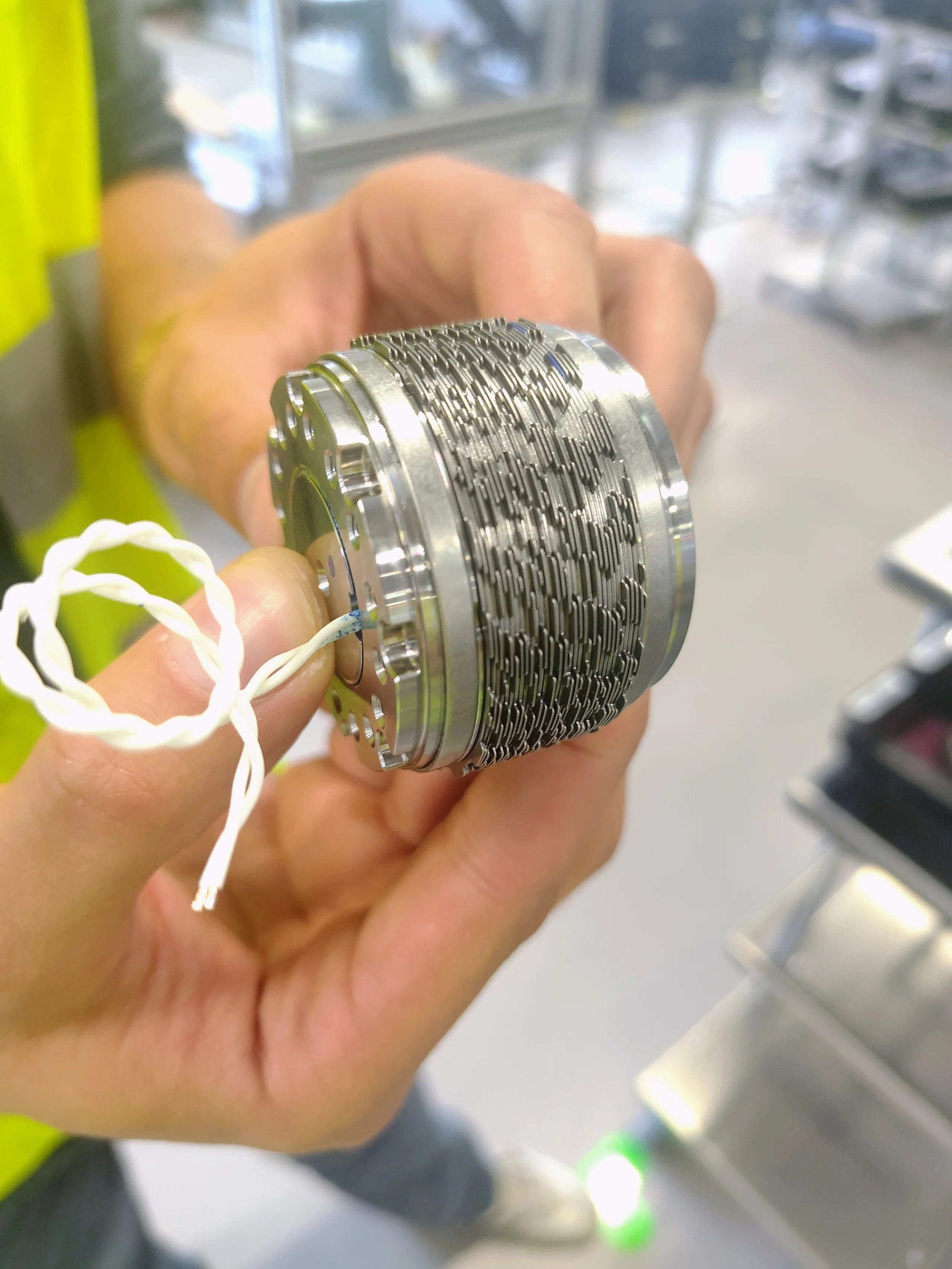
The disassembled actuator helped me picture where this happens. What first looked like a dense stack of metal rings was a series of alternating rotating and stationary elements, with very small gaps for the MR fluid. As the knee bends, the surfaces move past one another, shearing the fluid between them. An electromagnetic coil changes how strongly the fluid resists that movement.
Seeing those pieces separately also helped me understand how much coordination the finished knee conceals. The plates alone cannot respond to a step; they depend on software and a carefully controlled magnetic field. I could follow each part in isolation, but making them work together reliably was a much more complex level of engineering.
Nearby, I saw components for the Power Knee, which approaches movement differently. Where Navii regulates resistance, the Power Knee uses a motor to contribute power, including assistance with actions like standing up and climbing stairs. I thought the Power Knee beautifully demonstrated how even though two products can look very similar, engineers can take vastly different approaches to how each supports movement, with different implications for the person using the device.
I also got to hold the internal actuator from a Proprio Foot. This microprocessor-controlled ankle-foot system adjusts the ankle angle as someone walks. It lifts the toes during swing to help with ground clearance, adapts ankle position for slopes, and allows adjustment for different shoe heel heights. What surprised me most was the size of the mechanism responsible for those functions. Something small enough to hold in my hand could influence how a person navigates the ground beneath them.
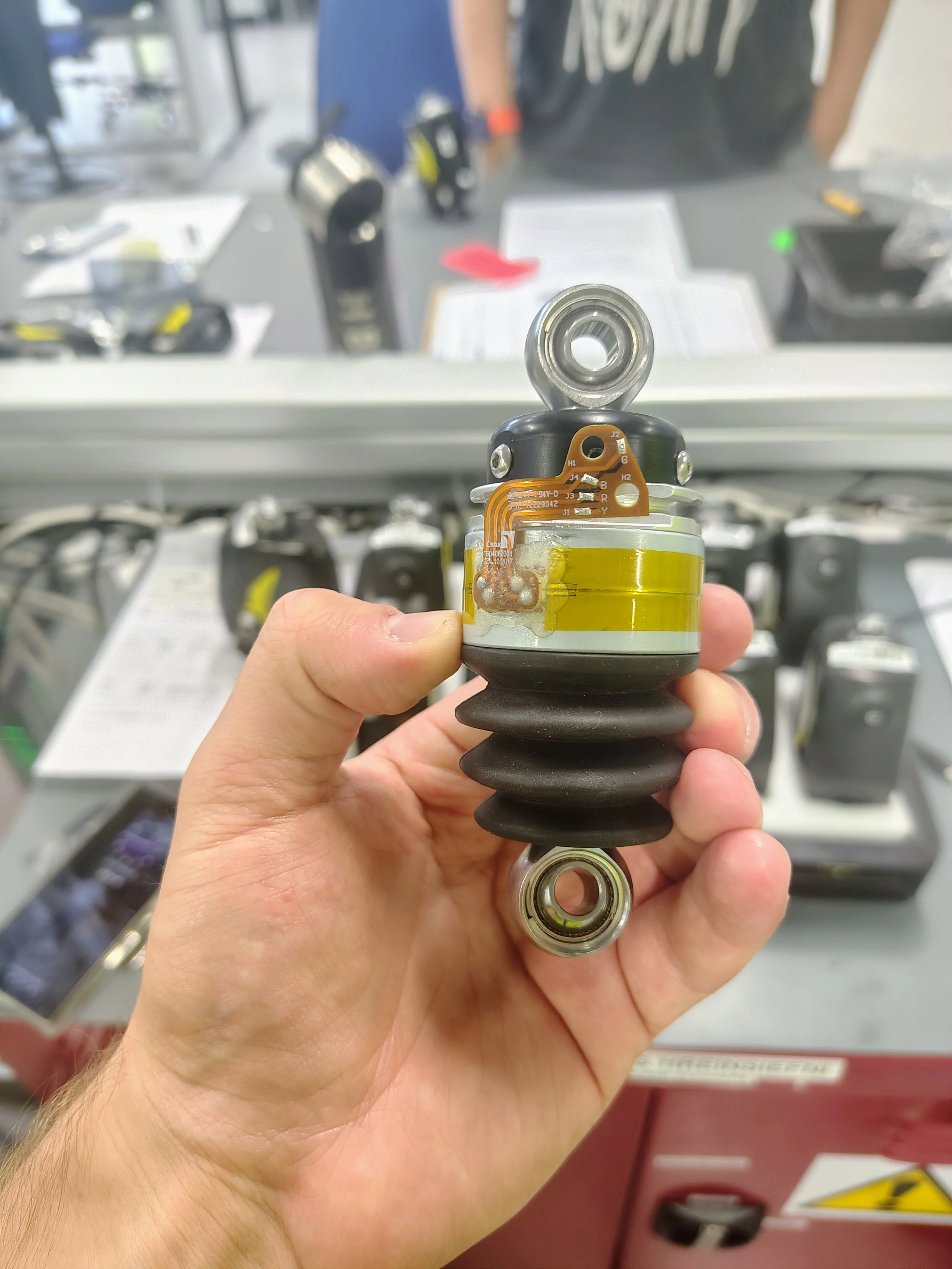
Verification seemed to sit behind almost every stage of work at Össur. A knee or ankle has to keep functioning through repeated loading and the impacts, moisture, dirt, and temperature changes of daily use. Watching a mechanism cycle in a test fixture, it was easy to see the importance of repetitive testing, given how someone would eventually trust the device with their weight.
Toward the end of the visit, we went back downstairs and briefly toured a manufacturing area. Compared to the quieter engineering spaces, the open floor felt busy and loud. It was filled with numerous machines and manufacturing equipment. Here, many of the components comprising the devices I had seen upstairs, along with other components that I hadn't seen, were produced. Some operations were highly automated, such as the machining of raw material into complex components via a CNC turn-mill. All in all, this floor reiterated the importance of precision and repeatability in prosthetic manufacturing.
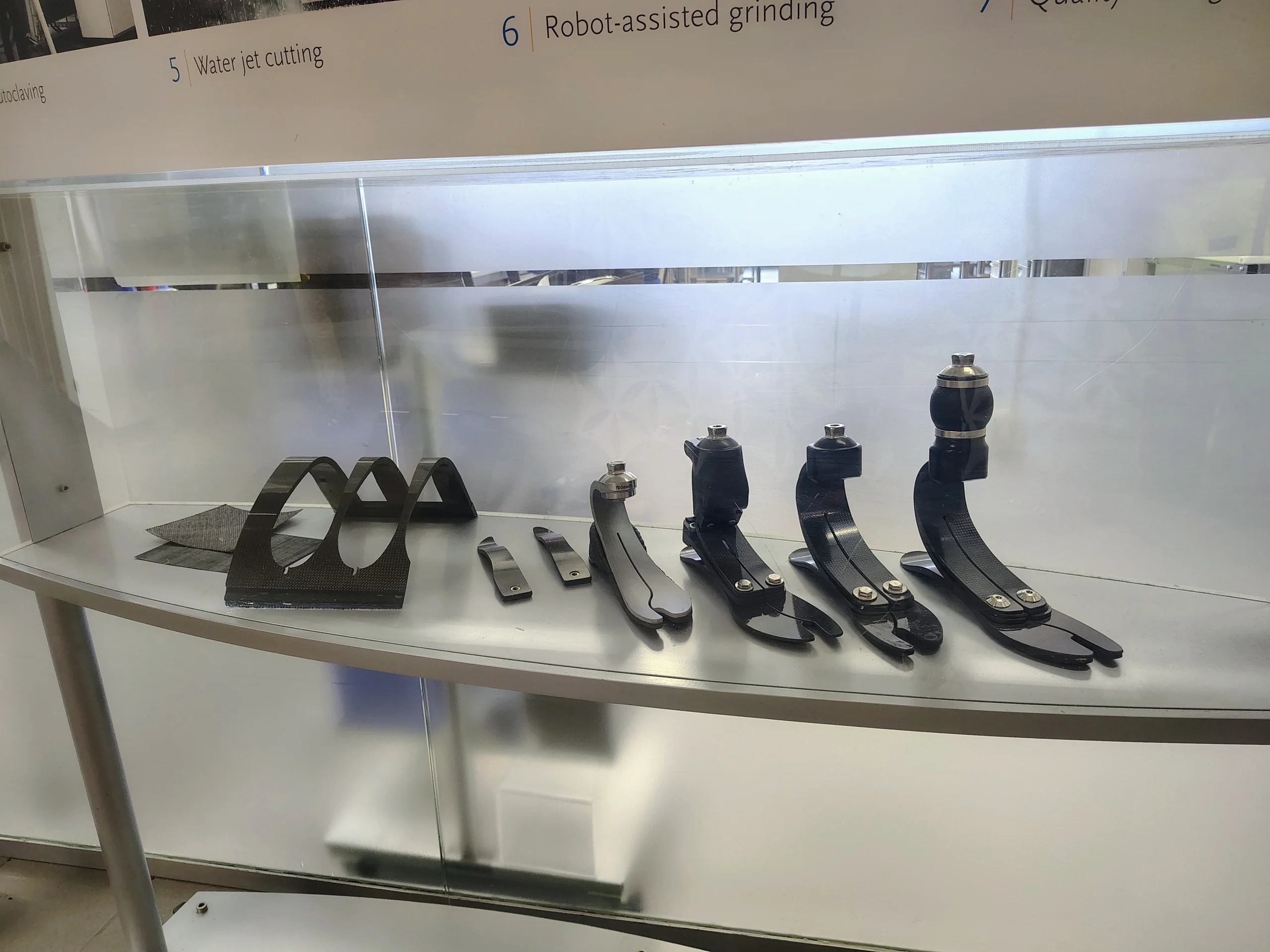
By the end of my visit, the term “bionic leg” felt much less mysterious to me. This experience gave me a better sense of the work behind the moment when someone first puts their weight on a prosthesis and begins their journey towards walking again.
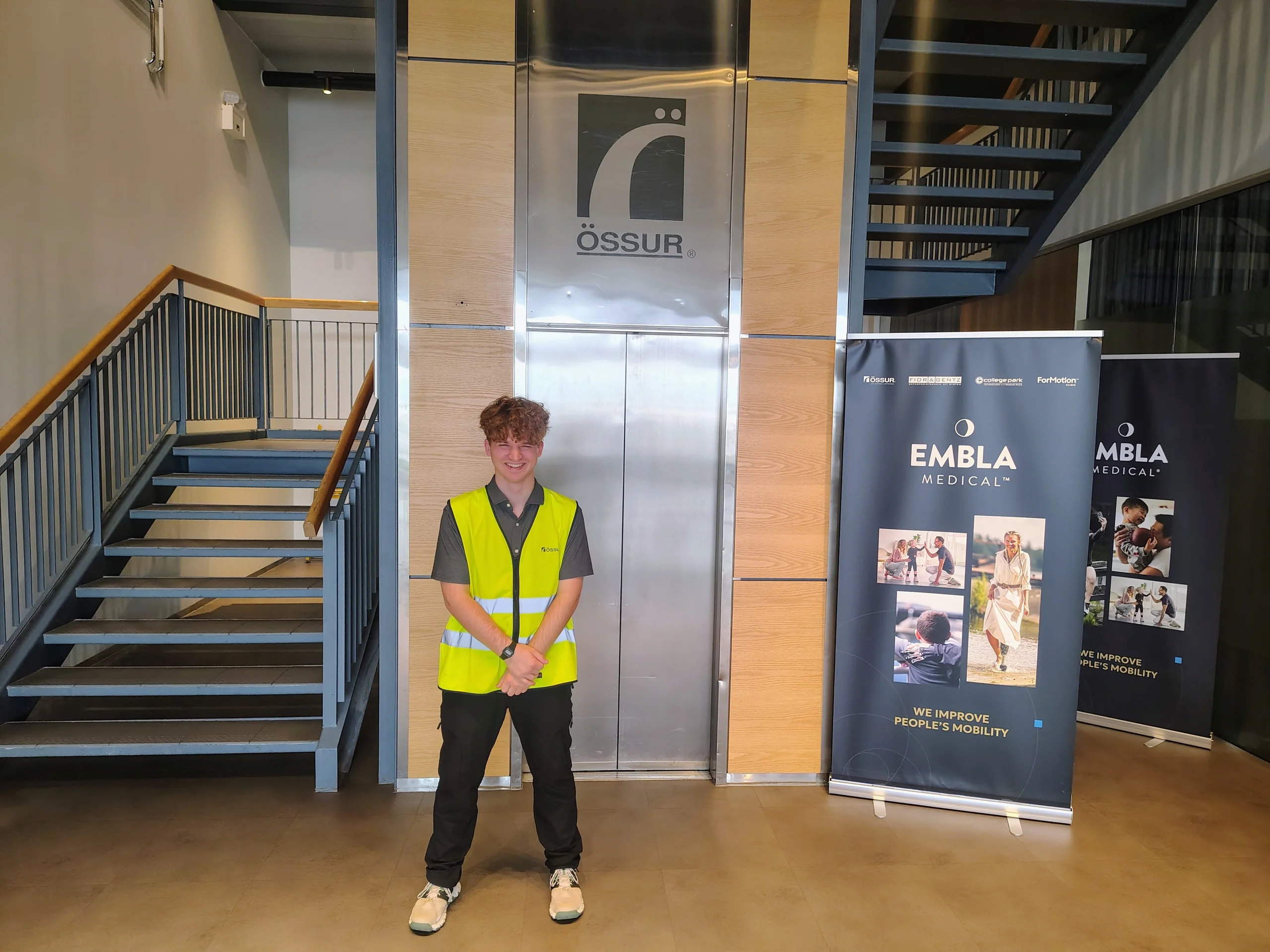
I left Iceland with more appreciation for prosthetic engineering and more questions about what happens beyond it. Understanding how a knee works is one part of understanding its place in someone’s life. Whether they can obtain it, feel safe wearing it, and find it useful in their own surroundings matters too. As I continue this fellowship, I want to follow those connections from the design decisions inside a device to the experiences of the people who live with them.